How to Become a Certified Flight Instructor (CFI): 2026 Guide
Published by
Jessica Haney
Published on
Updated on
Read time
10 min read
You already know how to fly. The question is whether you can teach someone else to fly safely, explain why an airplane behaves the way it does, and stay calm in the right seat while a student makes mistakes. That is what a Certified Flight Instructor (CFI) certificate proves, and in 2026 it is still the most common bridge between a commercial pilot certificate and a paid seat in a cockpit.
This guide walks through the FAA path to your CFI certificate, what the certificate actually lets you do, a realistic timeline, what the training costs, and how our CFI program at Fox Field (KWJF) fits into that plan.
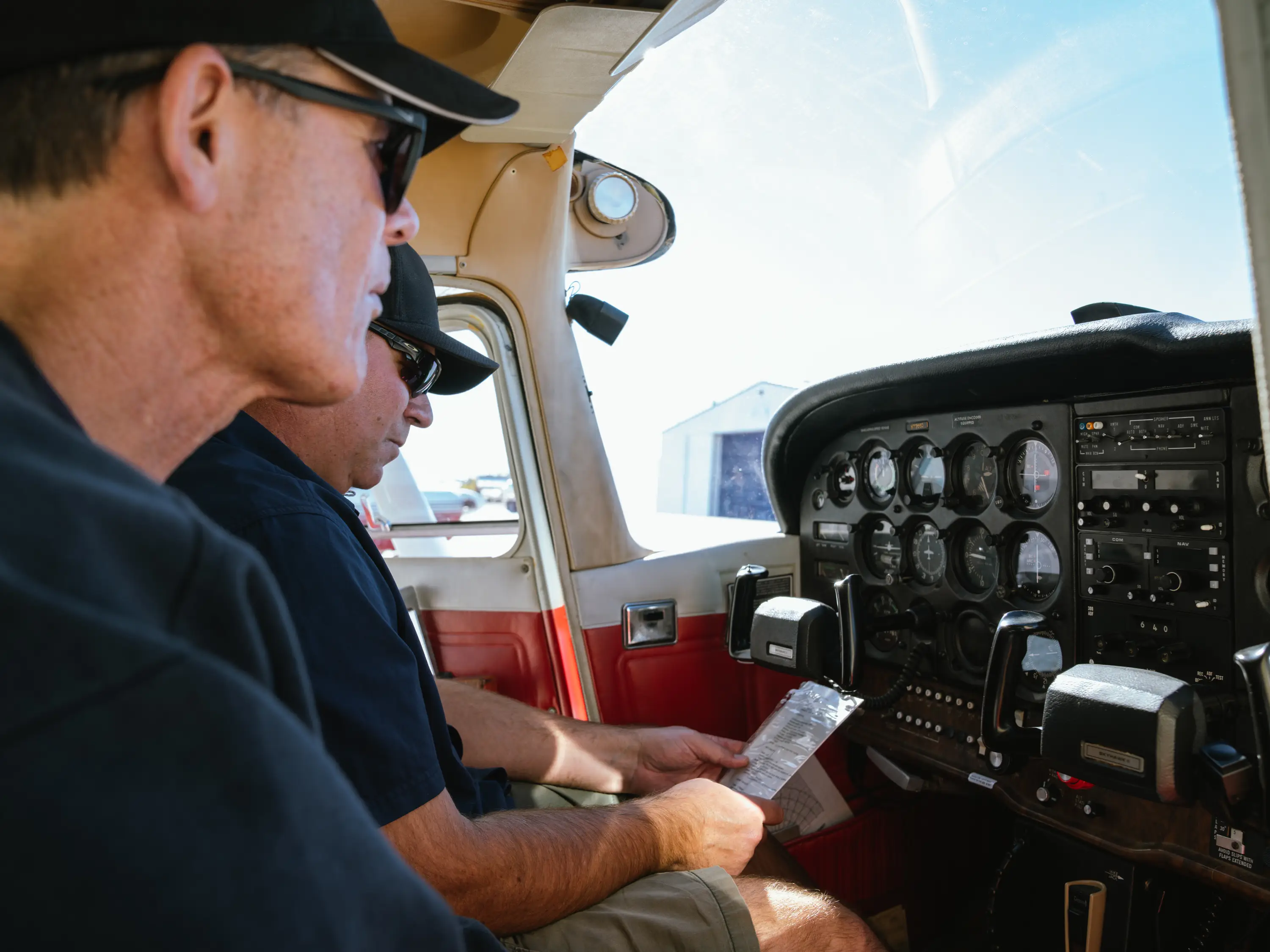
What a CFI Certificate Actually Lets You Do
A Certified Flight Instructor certificate is a flight instructor credential issued under 14 CFR Part 61. It is separate from your pilot certificate, and it authorizes you to provide flight and ground instruction, sign off student solo flights, and endorse students for their own FAA knowledge and practical tests, all within the category, class, and ratings you hold.
Most new instructors start with a single CFI (airplane) certificate, then add:
- CFII, the instrument instructor privilege, which lets you teach students working toward an instrument rating.
- MEI, the multi-engine instructor privilege, which lets you teach in multi-engine aircraft.
Neither CFII nor MEI is required to start instructing. They are add-on ratings that widen the type of students you can train and, in practice, make you more marketable to a busy flight school. Our CFI program trains you toward the base CFI certificate first, then supports CFII and MEI as a next step if you want to teach a broader range of students.
The FAA Path to Your CFI Certificate
Becoming a CFI is not a single test. It is a sequence of prerequisites, ground knowledge, and a practical test that evaluates your ability to fly and teach at the same time.
Before you can start CFI training, you generally need to already hold:
- A Commercial Pilot Certificate, with the category and class rating you want to instruct in.
- An Instrument Rating appropriate to that category and class, since most instructor training paths include preparing students for certificates that require one.
- A current FAA medical certificate.
From there, the CFI path adds:
- Fundamentals of Instruction (FOI): a knowledge test on how people learn, how to plan a lesson, and how to manage risk from the instructor’s seat. If you already hold another instructor certificate (ground or flight), you do not need to repeat it.
- A CFI-specific knowledge test covering the technical subject areas you will be teaching.
- Spin awareness, entry, and recovery training with a logbook endorsement, required for a single-engine airplane instructor rating.
- The CFI practical test (checkride), which is longer and more demanding than most checkrides you have taken so far. A Designated Pilot Examiner evaluates both your flying and your ability to explain what you are doing and why, in real time, from the right seat.
There is no separate FAA flight-hour minimum for the CFI certificate itself. Your hours come from already holding your commercial certificate and instrument rating; the CFI training on top of that is about teaching skill, not additional total time. That is different from the 250-hour commercial requirement, and it is a common point of confusion for pilots researching “CFI hour requirements.”
The CFI checkride has a reputation as one of the more demanding FAA practical tests, largely because it tests two skills at once: flying to commercial-level precision and teaching it clearly under pressure. Our CFI curriculum spends real time on the Fundamentals of Instruction and right-seat proficiency specifically so the checkride is not the first time you have had to do both at once.
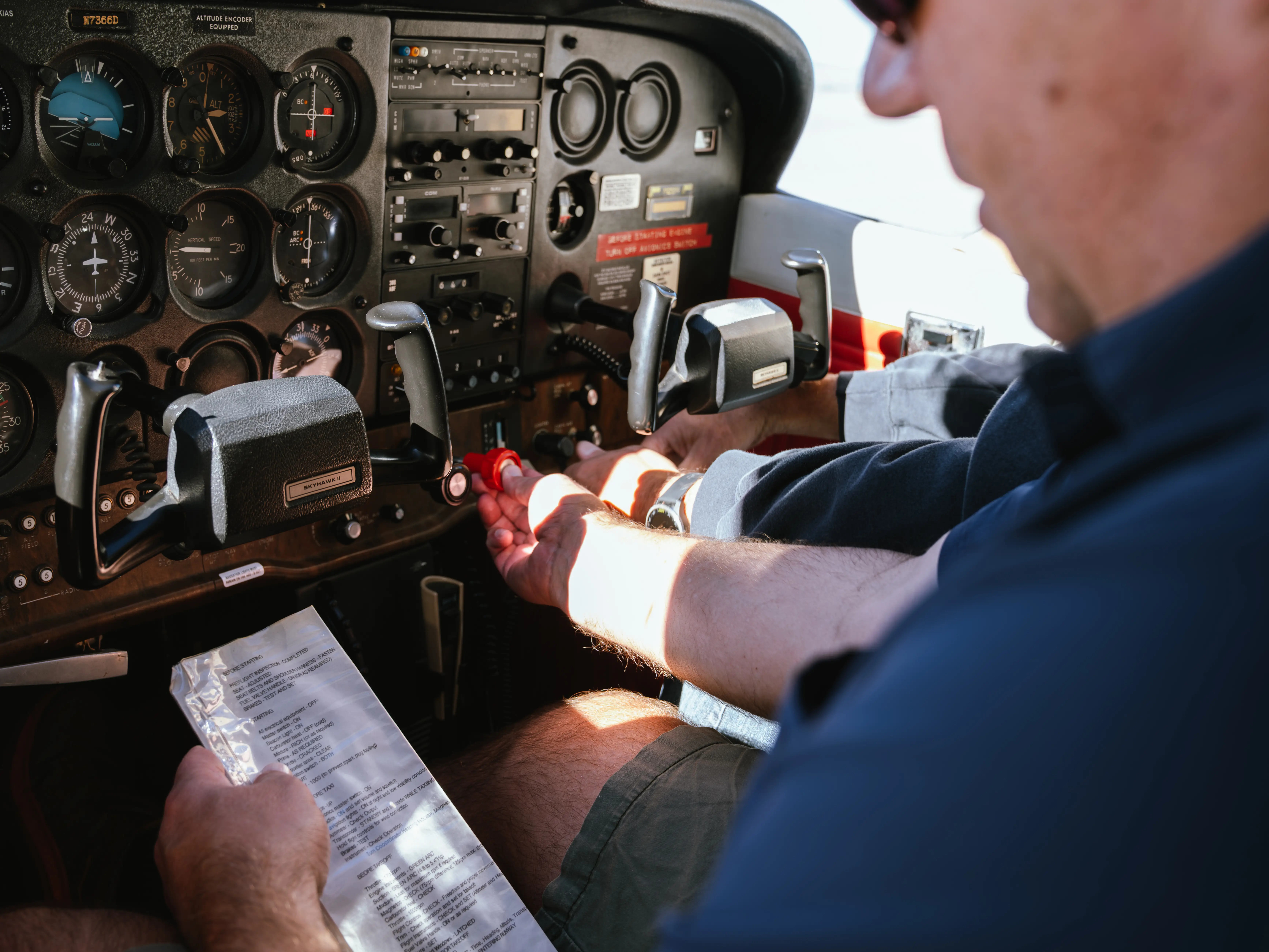
How the Prerequisites Stack Up Before You Start
Because CFI training sits on top of three earlier certificates, most pilots planning their CFI timeline want to see the whole stack in one place, not just the instructor phase.
| Certificate or Rating | What It Adds | FAA Minimum Hours |
|---|---|---|
| Private Pilot Certificate | Foundational flying skills, solo and passenger privileges | 40 hours |
| Instrument Rating | Flying in clouds and low-visibility conditions | 40 hours |
| Commercial Pilot License | Flying for compensation, professional maneuver precision | 250 hours total |
| Certified Flight Instructor | Authorization to teach flight and ground lessons | No separate hour minimum |
If you already hold your commercial certificate and instrument rating, you can start CFI training immediately. If you are earlier in the process, our Commercial & CFI Track bundles commercial training and instructor preparation into one continuous plan, so you are not restarting your training relationship every time you finish a certificate.
A Realistic CFI Training Timeline
For a student who already holds a commercial certificate and instrument rating, CFI training at Fox Field typically runs one to two months for a motivated full-time student. That window covers Fundamentals of Instruction ground school, spin training, right-seat proficiency work, and checkride preparation.
Two things move that timeline more than anything else:
- Ground school pace. The Fundamentals of Instruction material is often the hardest part of the CFI checkride, not the flying. Students who treat ground school as seriously as flight lessons tend to move faster.
- Weather and aircraft availability. Fox Field’s 300-plus flyable days a year and our in-house Part 145 maintenance mean fewer scheduling gaps than schools that lose training days to marine-layer fog or wait on outside maintenance shops.
If you are starting from zero flight time and want the full sequence from student pilot through CFI, our Zero to Airline Roadmap lays out the complete phase-by-phase timeline, including private, instrument, commercial, and multi-engine training ahead of the CFI phase.
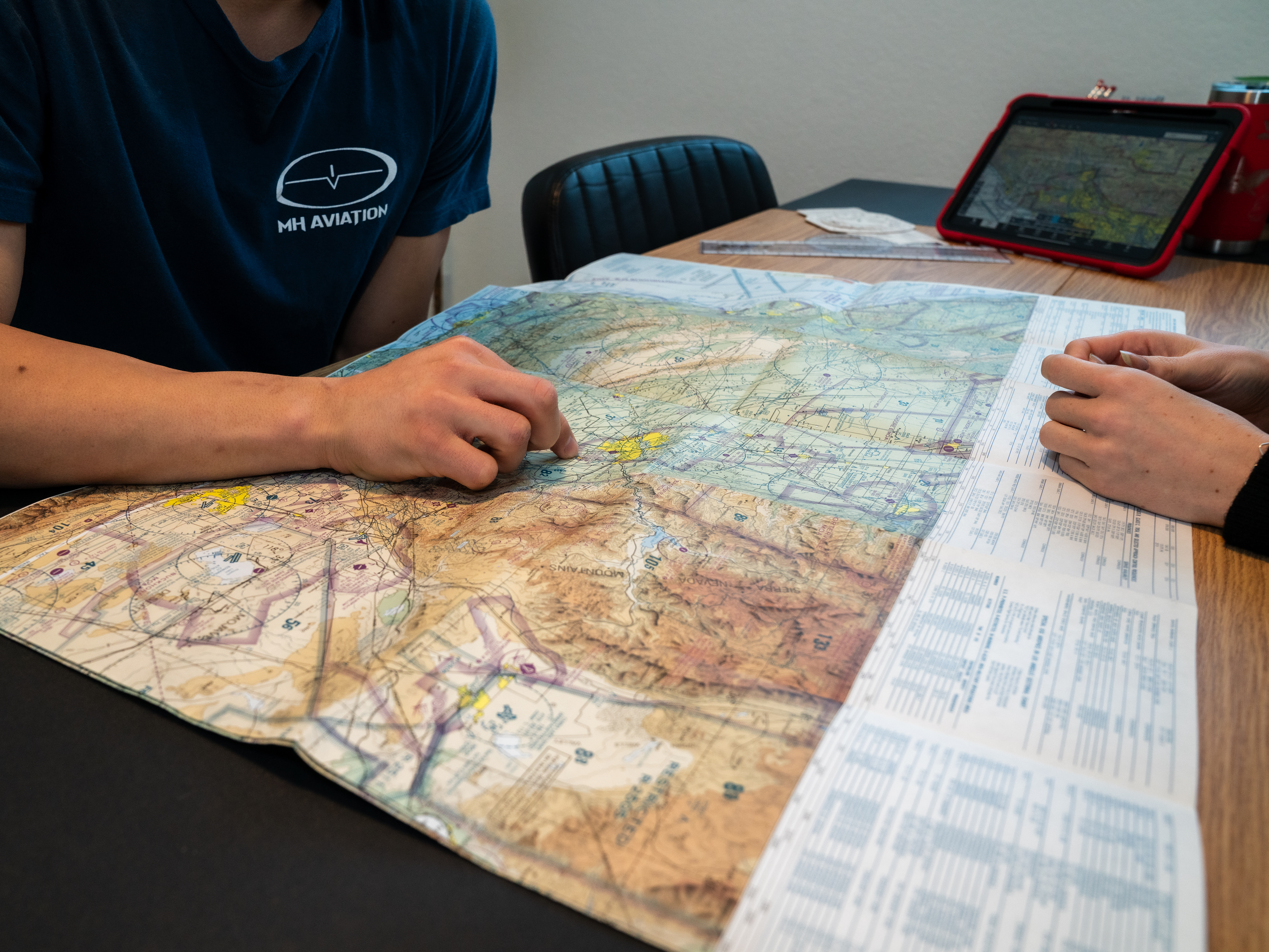
What CFI Training Costs
CFI training costs come from the same three places as every other certificate: aircraft rental, instructor fees, and testing costs.
At MH Aviation, our CFI program runs on our standard $170/hr wet rate (fuel included) plus a $90/hr instruction fee, the same rates listed on our current rates page. On top of that, budget for the FOI and CFI knowledge test fees and your checkride/DPE fee.
Your total cost depends heavily on how much right-seat proficiency work you need and how quickly you move through Fundamentals of Instruction, so it varies student to student. We run a transparent, pay-as-you-go model rather than bundling training into a locked package, and financing options may be available to qualified applicants through third-party lenders if you would rather spread out the cost. Contact us and we will walk through your current logbook and give you a personalized estimate instead of a generic number that will not match your situation.
Building Flight Hours as a CFI
For most career-track pilots, the real reason to earn a CFI is what comes after the checkride: you start getting paid to fly instead of paying to fly.
Standard airline transport pilot eligibility is commonly summarized as 1,500 hours, and instructing is the most common way pilots build that time while earning an income. Every hour you spend teaching a student counts toward your own logbook. At MH Aviation, CFIs work as independent contractors, which means you control your own schedule and student load rather than working a fixed shift.
We prioritize hiring from our own CFI graduates, since you already know our fleet, our procedures, and our students by the time you finish training. Every opening still comes down to a successful interview and current need on our flight line, so treat CFI training here as a serious first step toward joining our team, not an automatic hire. High-performing instructors may also get opportunities through our Avlink Direct partnership to fly managed aircraft beyond instruction, adding variety to a logbook that would otherwise be all training flights.
If your goal is the full path from zero hours to an airline interview, our Zero to Airline Roadmap breaks down how instructing hours typically stack up against the 1,500-hour milestone.
Why Train for Your CFI at Fox Field
Two things separate CFI training here from a coastal LA-area school: maintenance and weather.
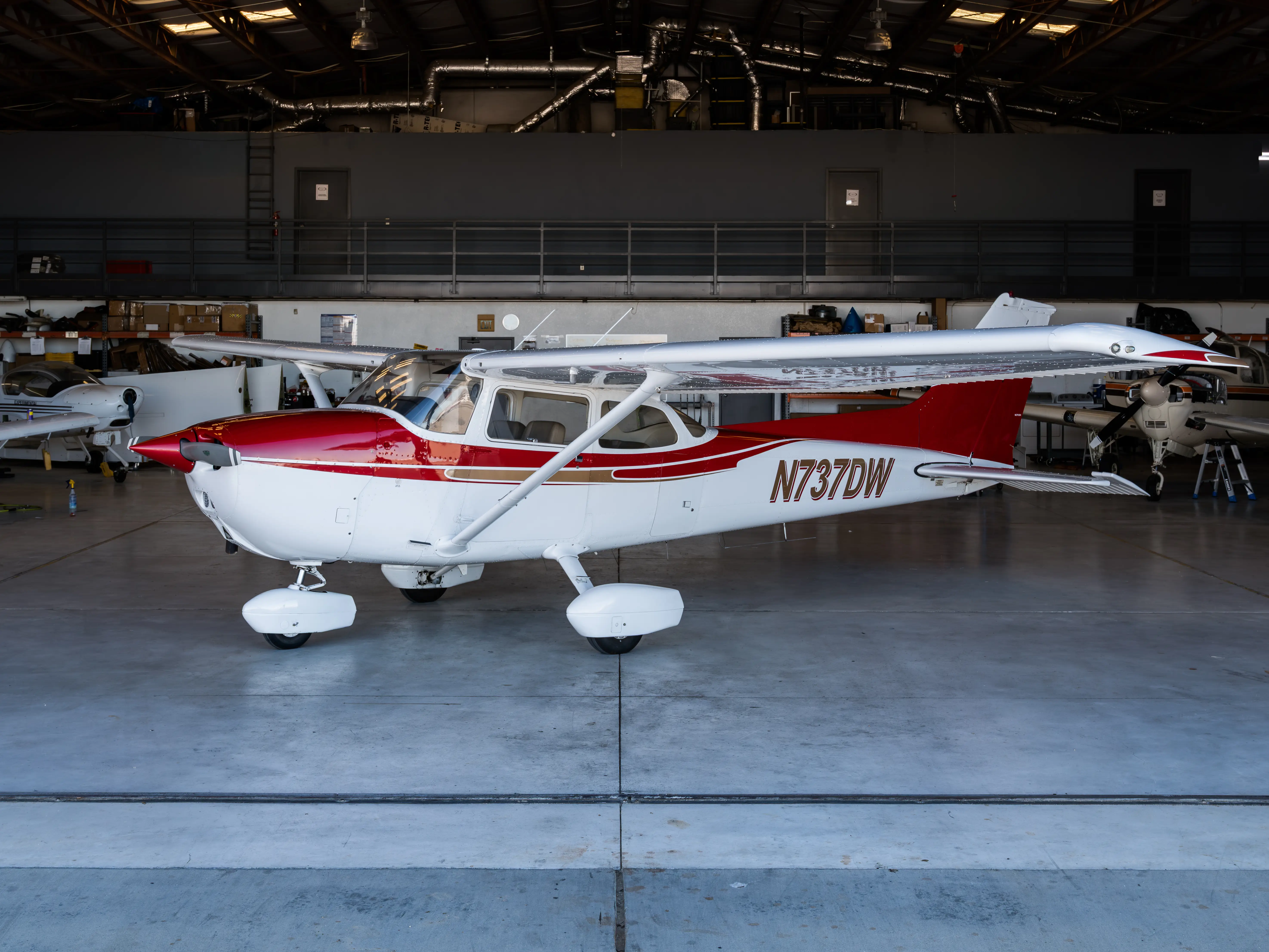
Because we operate our own Part 145 repair station, the Cessna 172s you train and eventually teach in are maintained by the same team, not an outside shop with its own queue. That matters more once you are instructing, because every grounded aircraft is a missed lesson and a missed billing hour, not just an inconvenience.
Fox Field’s High Desert location also means you are not losing training days to the LA Basin’s marine layer. Consistent weather, an uncongested pattern, and open aircraft availability let CFI candidates move through spin training, right-seat proficiency, and checkride prep without the stop-and-start pace that stalls momentum at busier coastal airports.
If you still need your commercial certificate before you can start CFI training, our Commercial & CFI Track combines both into one plan so your training and your future instructor job search move on the same timeline.
Frequently Asked Questions
How long does it take to become a CFI in 2026?
If you already hold your commercial certificate and instrument rating, plan on roughly one to two months of full-time training at Fox Field for Fundamentals of Instruction, spin training, and checkride prep. Part-time students should expect longer, since consistency matters more than any single hour count.
Is there a minimum number of flight hours required to become a CFI?
No. Unlike the private, instrument, and commercial paths, the CFI certificate itself has no separate FAA hour minimum. Your flight hours come from already holding your commercial certificate and instrument rating; CFI training builds teaching skill on top of that experience.
Do I need my CFII or MEI before I start instructing?
No. A standalone CFI certificate lets you teach. CFII and MEI are add-on instructor ratings that widen the students you can train and generally make you more marketable, but plenty of new instructors start with a single CFI certificate and add CFII or MEI once they are working.
What happens if I fail the CFI checkride?
The CFI checkride is widely regarded as one of the more demanding FAA practical tests because it evaluates flying and teaching at the same time. If you do not pass on the first attempt, we review the examiner’s notes with you, target the specific weak area, and get you back on the schedule for a retest.
What does CFI training cost at MH Aviation?
Training runs on our standard $170/hr wet rate plus a $90/hr instruction fee, plus knowledge test and checkride fees. Your total depends on how much right-seat proficiency work you need, so contact us for a personalized estimate based on your current logbook.
Will MH Aviation hire me after I earn my CFI?
We prioritize hiring our own CFI graduates because you already know our fleet, students, and procedures. Every hire still depends on a successful interview and current openings on our flight line, so treat your CFI training as a strong first step toward joining our team rather than a guarantee.
Start Your Path to the Right Seat
Earning your CFI is the step that turns years of flying into a paid career and a fast track toward your 1,500-hour airline milestone. Whether you already hold your commercial certificate and instrument rating, or you need to complete the Commercial & CFI Track first, we can build a training plan around where you are today.
Contact us to review your current certificates and logbook, get a personalized CFI training estimate, and start your instructor training at Fox Field.