Instrument Rating Cost in Lancaster, CA: 2026 Guide

Published by
Jessica Haney
Published on
Updated on
Read time
11 min read
If you are checking instrument rating cost in 2026, start with the short answer: the FAA minimums give you a floor, but your real budget depends on aircraft time, instructor time, ground study, checkride fees, and how much practice you need to be safe and ready.
At MH Aviation in Lancaster, CA, single-engine aircraft time runs $170/hr wet and instrument instruction is $80/hr. If all 40 FAA minimum instrument hours were flown dual in the airplane at those rates, the aircraft-plus-instructor math would be $10,000. That is a planning example, not a quote, because your cross-country PIC time, ground study, DPE fee, test fees, supplies, and proficiency needs can change the final number.
This guide shows what drives the cost, how Lancaster and Fox Field affect the training conversation, and how the Instrument Rating fits before commercial pilot training.
What an Instrument Rating Actually Adds
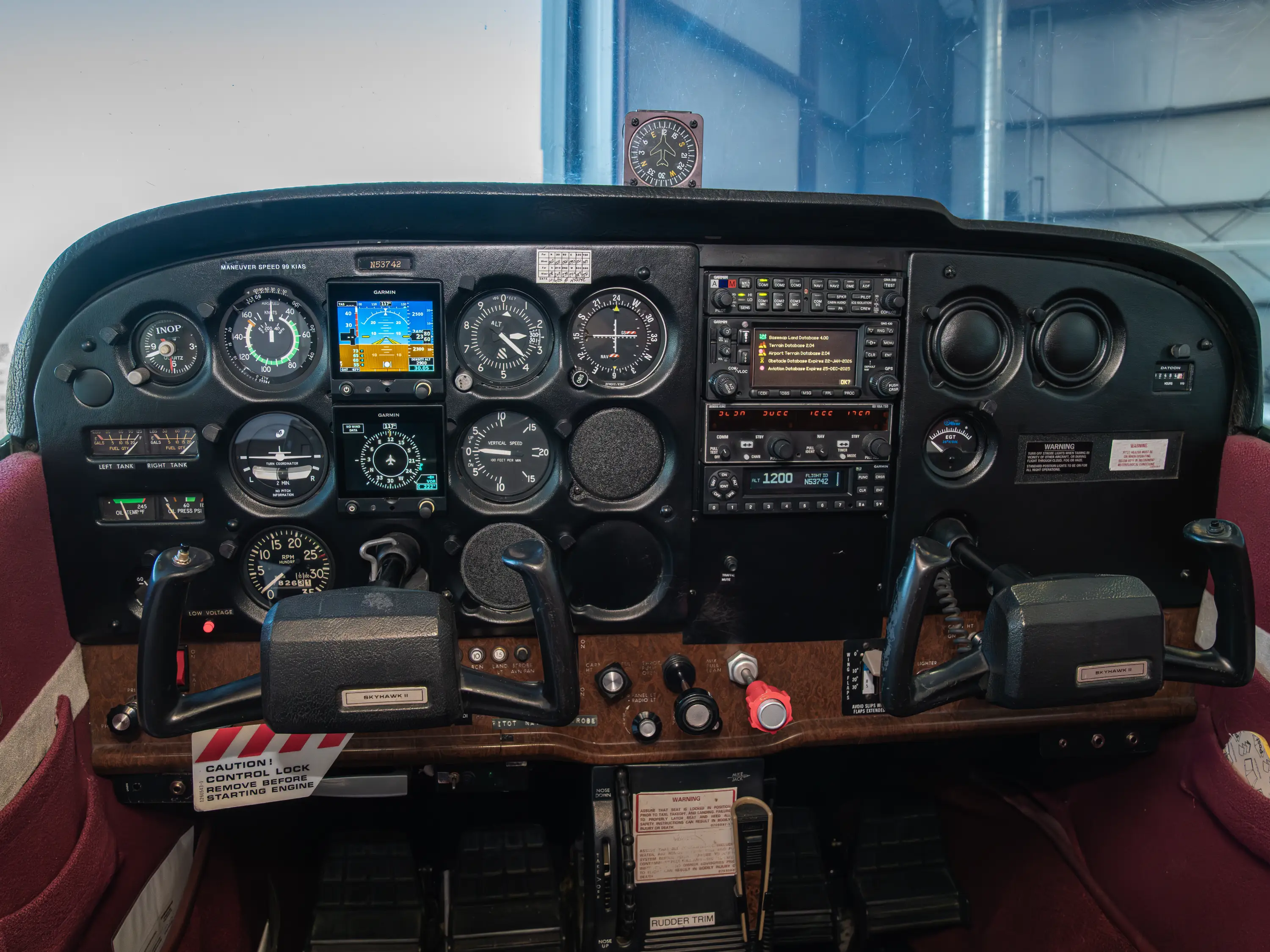
An instrument rating is not a new pilot certificate by itself. It is a rating added to your existing pilot certificate. In plain English, it is the training path that teaches you to fly by reference to instruments and operate under Instrument Flight Rules, often shortened to IFR.
That matters because weather is not just a yes-or-no question. A private pilot who only flies under visual rules must keep enough visibility and cloud clearance to stay legal and safe. An instrument-rated pilot has more tools, more procedures, and more legal privileges, but that does not mean flying in any weather is smart.
The instrument rating helps you build:
- Weather judgment so you understand ceilings, visibility, alternates, and route risk
- Procedure discipline for clearances, approaches, holds, and missed approaches
- Cross-country utility when conditions are legal and within your limits
- Next-step readiness if you plan to move toward the Commercial Pilot Certificate
The FAA’s instrument rating rule is in 14 CFR 61.65. The key point for your budget is simple: the rating is skill-based. You are not only paying to reach an hour number. You are paying to become ready for the FAA knowledge test, practical test, and real-world instrument decision-making.
If you recently earned your Private Pilot Certificate at Fox Field, this is often the cleanest next step because the habits are still fresh and the cross-country time you build can support future goals.
The FAA Minimums That Shape Your Budget
The Part 61 instrument-airplane requirements create the base of your cost plan. They also show why two students can pay different totals for the same rating.
| Requirement | What it means for you | Budget effect |
|---|---|---|
| Private Pilot Certificate or concurrent application | Most students start the instrument rating after private pilot training | You may already have some useful cross-country experience |
| 50 hours of cross-country PIC time | You need pilot-in-command cross-country time, including 10 hours in airplanes | Some of this may be built before or during your instrument plan |
| 40 hours of actual or simulated instrument time | This is the FAA minimum for instrument time | This is the main hourly cost driver |
| 15 hours with an authorized instrument-airplane instructor | Not all instrument time is the same; instructor time is required | Instructor billing must be part of your budget |
| 3 hours of recent instrument training before the practical test | You need recent prep before the checkride | Plan for finish-phase polish, not just hour-building |
| 250 NM IFR cross-country | Your training must include approaches at each airport and three different kinds of approaches | Route planning, weather, and aircraft scheduling matter |
The FAA minimum is not the same as the best personal budget. Some pilots need more time because they train around work, take breaks, need extra approach practice, or want more confidence before the checkride. That is normal. A serious cost plan should leave room for proficiency, not just the minimum.
The FAA Airman Knowledge Testing Matrix also lists the Instrument Rating Airplane knowledge test as 60 questions, 2 hours, and a 70 passing score. That test is separate from your flight training, so plan for ground study and any test-prep costs before your checkride window gets close.
For a deeper look at how hourly rates work, use the MH Aviation rates page with this section open. The right question is not “what is the lowest hourly rate?” The better question is: what total plan gets you trained, current, and ready without hidden assumptions?
The 2026 Instrument Rating Cost Math at MH Aviation
MH Aviation charges $170/hr wet for single-engine aircraft time and $80/hr for instrument instruction. A wet rate means fuel is included, which makes budget planning easier than comparing a dry rate that adds fuel separately.
Use this as a planning model, not a guaranteed invoice:
| Cost item | Planning basis | What to confirm before you start |
|---|---|---|
| Instrument Rating aircraft time | Current listed single-engine wet rate: $170/hr | Which aircraft you will use and whether rates changed |
| Instrument instructor time | Current listed instrument instructor rate: $80/hr | How briefing, ground instruction, and flight instruction are billed |
| Minimum-hour dual-aircraft example | 40 hours x $250/hr combined aircraft and instructor math = $10,000 | This assumes every instrument hour is dual in the airplane and does not include other costs |
| Cross-country PIC time | Part 61 requires 50 hours of cross-country PIC time | How much you already have from private pilot flying |
| Ground study and knowledge test | Required knowledge preparation and FAA test | Current test-prep choice and testing-provider fee |
| Practical test and DPE fee | Paid outside normal aircraft and instructor billing | Current examiner fee, aircraft time, and retest policy if needed |
| Supplies and subscriptions | Charts, apps, view-limiting device, headset if needed, and study tools | What you already own from private pilot training |
This is where students can lose money by reading a headline price too quickly. A post that says “instrument rating cost” may only count flight hours. A better estimate separates aircraft, instructor, ground, exams, checkride, supplies, and extra proficiency time.
MH Aviation does not offer direct in-house financing and runs on a pay-as-you-go model. Confirm the current payment structure during your enrollment or rate conversation, because how you pay affects how you pace training.
If you want the cleanest next step, bring three numbers to your first conversation:
- Your current total time
- Your current cross-country PIC time
- Your current simulated or actual instrument time
Those numbers help MH Aviation talk through a better budget than a generic article can give you. You can start that conversation through the contact page.
Why Lancaster and Fox Field Change the Training Conversation
The raw appeal of instrument training in Lancaster is not that Fox Field guarantees perfect weather. It does not. The real value is that Fox Field gives you a towered high-desert base, nearby regional airport options, and a training environment where weather planning is still real.
FAA terminal-procedure data lists published instrument procedures at KWJF, KPMD, and KMHV. You can always verify current procedure data through the FAA’s Digital Terminal Procedures tools before a flight.
That gives instrument students useful planning questions:
- What does the weather look like at Fox Field compared with Palmdale, Mojave, and the LA Basin?
- Which approaches are appropriate for today’s lesson?
- What is the alternate if the plan changes?
- How do wind, terrain, ceilings, visibility, and heat affect the go/no-go decision?
The Antelope Valley also needs careful wording. The National Weather Service describes the area as High Desert, generally drier than the Los Angeles Basin and outside the basin’s common marine-layer stratus and fog pattern. Marine-layer clouds can move inland over coastal areas, but NWS materials also explain that hills and mountains limit how far those clouds reach.
So the right lesson is not “Lancaster always gives you real IMC.” The right lesson is: Southern California weather gives you plenty to study, and Lancaster students should learn to compare conditions across airports, routes, terrain, and alternates. When actual instrument conditions are legal, safe, and instructor-approved, they may be useful. But simulated instrument training is still a core part of the rating.
That is why the local environment pairs well with a structured instrument rating program and a maintenance-backed training fleet. The aircraft, instructor, weather plan, and airport choice all work together.
How the Instrument Rating Fits Before Commercial Pilot Training
One target question behind this topic is “how much does it cost to get your commercial pilot license?” The FAA term is Commercial Pilot Certificate, and it is a separate step from the instrument rating.
Still, the two are connected. A commercial pilot certificate without the matching instrument rating carries important limits for passenger-carrying flights over 50 nautical miles or at night. So if your goal is paid flying, the instrument rating is often a practical step before or alongside commercial pilot training.
Here is the clean way to think about it:
| Your goal | Why the instrument rating matters | Best next internal resource |
|---|---|---|
| Better personal cross-country flying | You learn weather, approaches, alternates, and IFR procedures | Instrument Rating |
| Career-track training | The rating supports the move toward professional pilot skills | Commercial Pilot Certificate |
| Full path planning from first flight | You need to understand each step before you budget the whole path | Zero to Airlines |
| Cost comparison | You need to separate aircraft, instructor, third-party, and proficiency costs | Rates |
Do not let one search query blend the whole path into one price. The Private Pilot Certificate, instrument rating, commercial certificate, CFI path, and multi-engine training each have their own cost drivers.
If you already have your private certificate, the instrument rating is the next conversation because it changes how you plan cross-country flights and how you prepare for professional training. It does not guarantee a job, a checkride pass, or a fixed total price. It does give you a stronger foundation for the ratings and certificates that may follow.
Questions to Ask Before You Start
Before you enroll, ask questions that protect your budget and your training pace. A good instrument plan should make the unknowns visible before you start paying for flight time.
Bring this checklist to your MH Aviation contact or enrollment conversation:
- How much cross-country PIC time do you already have? This affects how much flying you still need before the checkride.
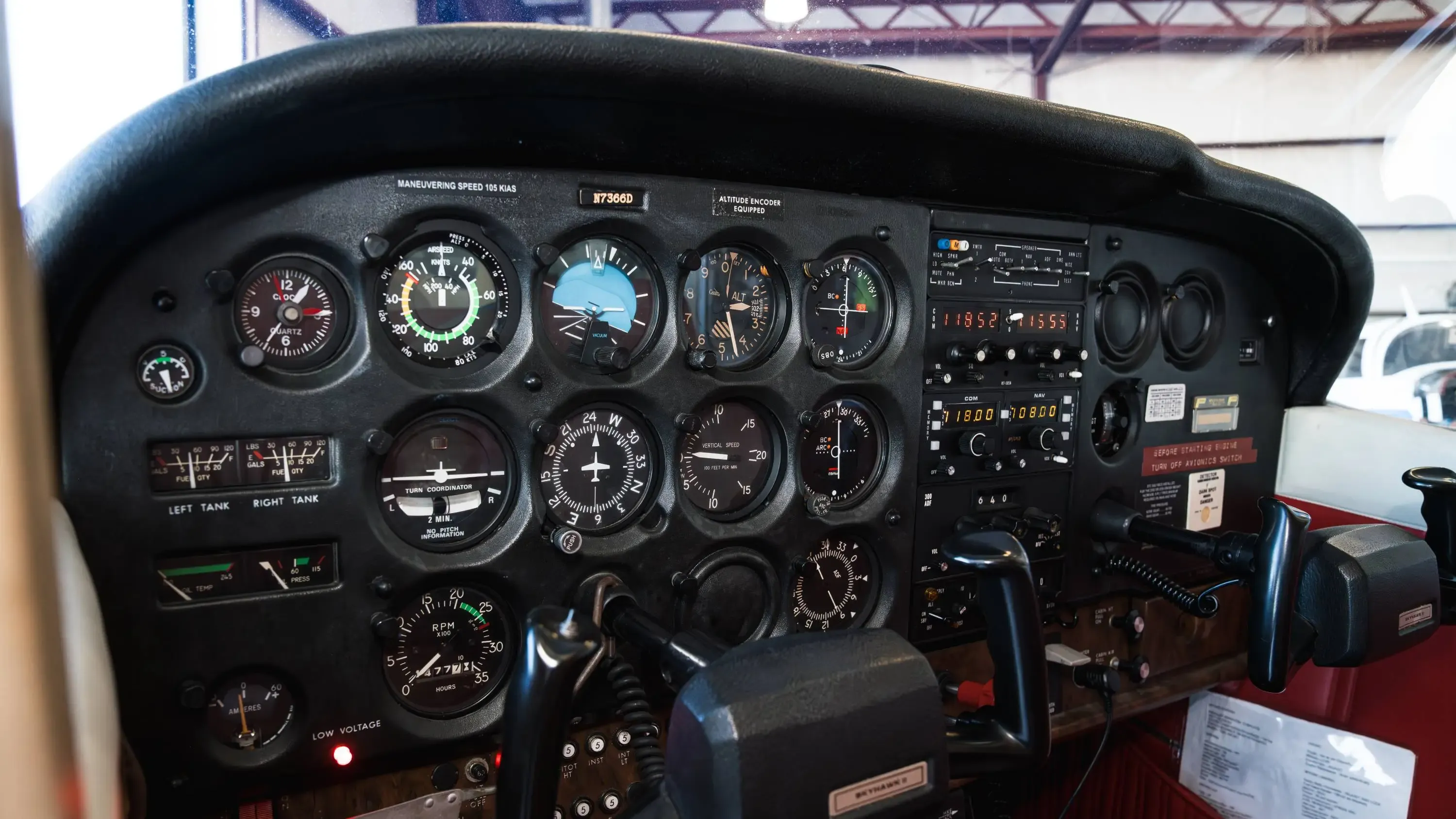
- Which aircraft will you use for instrument training? Confirm the current aircraft, avionics, and rate through the fleet and school team.
- How is instructor time billed? Ask how flight instruction, ground instruction, briefings, and checkride prep are handled.
- What third-party costs should you budget for? Ask about the FAA knowledge test, checkride/DPE fee, supplies, and subscriptions.
- What happens if weather changes? A serious school should talk about safe options, not promise perfect weather.
- How should you pace training if you are paying as you go? MH Aviation runs a pay-as-you-go model, so training consistently — without big gaps — is what keeps your progress moving.
- What is the next step after the rating? If you are career-minded, ask how this connects to the Commercial Pilot Certificate.
The strongest budget plan is honest about uncertainty. You are paying for a serious aviation skill, not a fixed-price online course. The goal is to know what you control, what the school controls, and what weather, FAA testing, and examiner scheduling can affect.
FAQ
How much does an instrument rating cost in 2026?
At MH Aviation’s current listed rates, a minimum-hour aircraft-plus-instructor planning example is $10,000 if all 40 FAA minimum instrument hours are flown dual in the aircraft at $170/hr wet plus $80/hr instructor. That does not include ground study, the FAA knowledge test, checkride/DPE fee, supplies, subscriptions, or extra proficiency time. Use the rates page and a school conversation for a current estimate.
Is an IFR rating the same as an instrument rating?
Pilots often search for IFR rating cost, but the official FAA term is instrument rating. IFR means Instrument Flight Rules. The Instrument Rating is the rating that helps a qualified pilot operate under those rules when all other requirements are met.
Can you start instrument training right after private pilot training?
Yes, many pilots start the instrument rating after earning the Private Pilot Certificate. The exact plan depends on your cross-country PIC time, schedule, aircraft availability, and readiness for instrument study.
Does Lancaster give instrument students real IMC?
Actual instrument meteorological conditions, or IMC, are weather-dependent. Do not choose a school based on a promise of real IMC. Lancaster’s high-desert environment is useful for weather planning, but instrument students still train heavily with simulated instrument conditions. Ask MH Aviation how local weather and nearby published procedures fit into the instrument program.
Do you need an instrument rating before a commercial pilot certificate?
Not always in the broadest legal sense, but it matters. A commercial pilot certificate without the matching instrument rating carries important passenger-carrying limits for cross-country flights over 50 nautical miles or at night. If you are planning a career path, talk through the connection between the Instrument Rating and Commercial Pilot Certificate.
What should you do before asking for an instrument rating estimate?
Gather your logbook totals, especially cross-country PIC and instrument time. Then ask MH Aviation about current rates, aircraft, instructor billing, third-party fees, and scheduling. The contact page is the best place to start that conversation.
Build Your IFR Plan Before You Spend
An instrument rating can make your flying more useful, but it should start with a clear plan. Before you commit money, know your current hours, the FAA minimums, the aircraft and instructor rates, the third-party costs, and the way Lancaster’s high-desert training environment fits your goals.
If your next step after the Private Pilot Certificate is better weather judgment, stronger cross-country planning, or a cleaner path toward the Commercial Pilot Certificate, start with MH Aviation’s Instrument Rating program and ask for a current training plan through the contact page.