The Rusty Pilot's Flight Review: Getting Current Again in 2026

Published by
Jessica Haney
Published on
Updated on
Read time
11 min read
The logbook usually gives it away before the pilot does. Steady entries, a checkride, a few cross-countries, a couple of trips with the family in the back. And then a blank page. A job changed. A kid arrived. The airplane sold. The gap on that page might be four years, or nine, or nineteen.
Then something brings it back. A friend’s Bonanza. A drive past Fox Field on a clear morning. And the first question is almost always the same one: how much of this do I have to do over?
The honest answer is that the certificate in your wallet never went anywhere. Pilot certificates do not expire. What expired is everything wrapped around it, and the flight review is only the first item on that list. Here is the full audit, and what a return to flying actually looks like when the last entry in your book has a lot of dust on it.
One Hour and One Hour Is a Floor, Not a Forecast
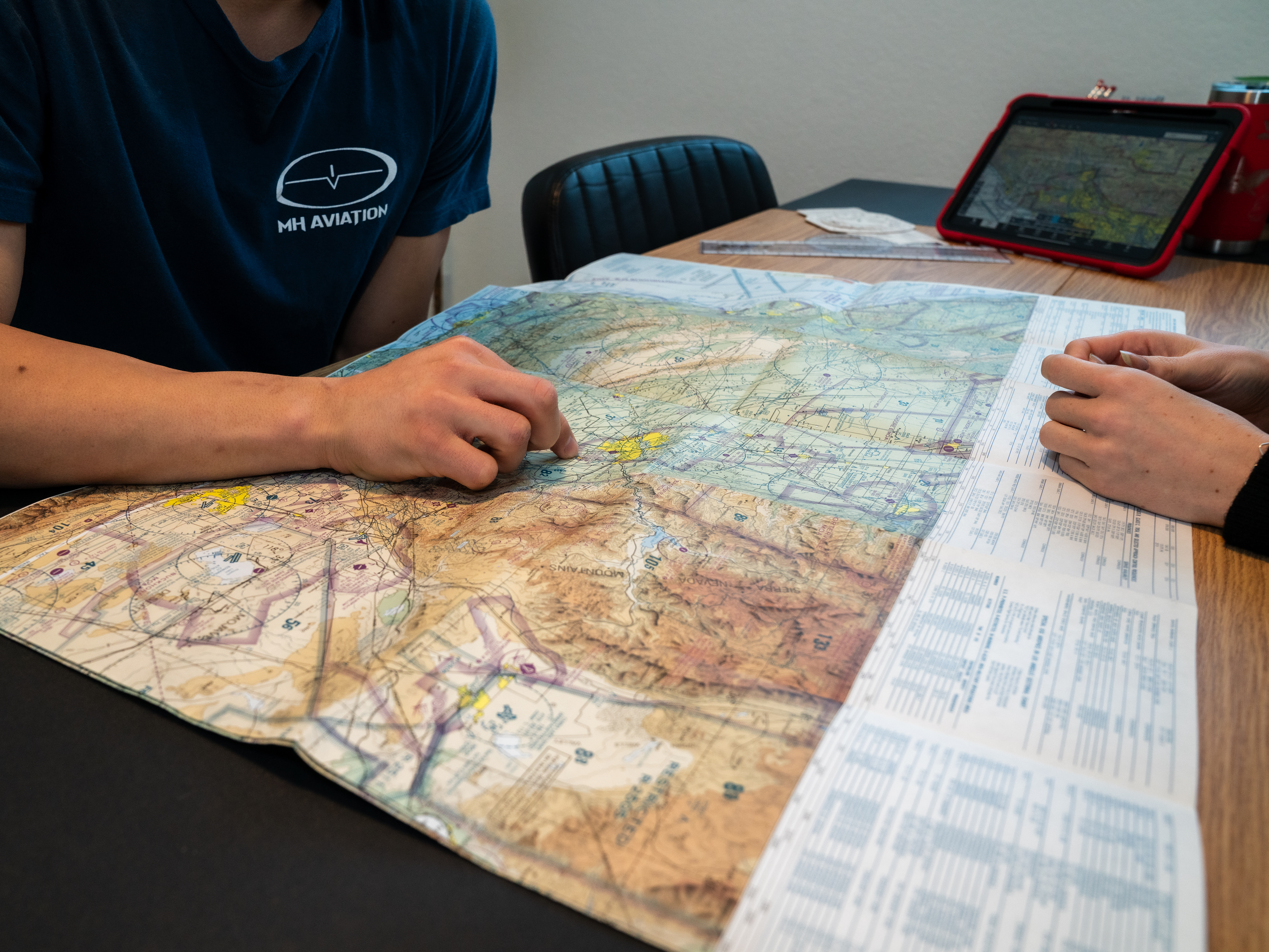
14 CFR § 61.56 sets a flight review at a minimum of 1 hour of ground training and 1 hour of flight training, accomplished within the preceding 24 calendar months, before you can act as pilot in command. Our guide to the 24-month rule walks through how that clock is counted.
Read the word minimum the way a performance chart reader would. It is the same kind of number as a book takeoff distance: real, published, and calculated for conditions that are not yours. Nobody writes the rule expecting every pilot to hit the floor exactly.
The part of 61.56 that matters most to a returning pilot is not the hour count at all. It is the sentence right after it, which says the maneuvers and procedures covered are at the discretion of the person giving the review. That discretion is not a loophole. It is the mechanism that lets the same regulation serve a pilot who flew 80 hours last year and a pilot who last landed an airplane during a different presidential administration. The rule scales because the instructor scales it.
So a review after a long layoff tends to run longer than a review for someone who never stopped. Not because a different rule applies to you, but because the same rule asks the instructor to be satisfied, and it takes more flying to get there when the scan is slow and the radio work has gone quiet. How much longer depends entirely on how long you have been away, what you flew before, and how quickly the habits come back, which is a conversation to have with an instructor, not a number to read on a blog. Our flight review page is the place to start; bring the logbook and we will build the plan around what is actually in it.
One thing you can stop worrying about right now: you cannot fail this. There is no unsatisfactory flight review endorsement, and nothing gets reported anywhere if the first flight back is ugly. Our post on flight review vs. checkride explains why that distinction changes how the whole day feels.
Your Review Was Not the Only Thing That Lapsed
This is the part that surprises people. A returning pilot books a flight review, flies it, gets the endorsement, and then discovers on the way to the airplane the following weekend that they still cannot do the thing they came back to do: take a friend up on a Saturday, or fly home after dark, or file IFR.
The flight review restores your authority to act as pilot in command. It does not, by itself, restore anything else. Four separate clocks run alongside it.
| What lapsed | The rule | What it takes to restore |
|---|---|---|
| Flight review | 14 CFR 61.56 | 1 hour ground + 1 hour flight with an authorized instructor, and the endorsement |
| Medical eligibility | 14 CFR 61.23 or BasicMed | A new exam, or the BasicMed course and physician checklist |
| Carrying passengers | 14 CFR 61.57(a) and (b) | Takeoffs and landings you fly yourself; no instructor signature required |
| Instrument privileges | 14 CFR 61.57(c) and (d) | Approaches and tasks, or an instrument proficiency check |
Work them in that order and the sequence takes care of itself. Skip one and you will find it the hard way.
The Medical: Check the Date on the Exam, Not the Date You Turned 40
Under 14 CFR § 61.23(d), how long a medical certificate lasts depends on its class and on your age on the date of the examination, not your age today.
- A third-class medical is good through the 60th month after the month of the exam if you had not reached age 40 on the exam date, and through the 24th month if you had.
- A second-class medical carries commercial privileges through the 12th month after the month of the exam, then continues as third-class privileges on the same 60-month or 24-month schedule.
- A first-class medical carries ATP pilot-in-command privileges through the 12th month if you were under 40 on the exam date, or the 6th month if you had reached 40, then steps down the same way.
The trap for a returning pilot is the age line. A pilot who took a third-class exam at 38 and stopped flying at 41 often assumes the certificate ran 24 months. It ran 60, because 38 is the number the rule cares about. That does not usually change the outcome after a long layoff (most gaps outlast either window), but it changes how far back you have to dig to find your last valid date, and it matters if you are trying to work out whether you ever let it lapse at all.
BasicMed, and the one date that disqualifies people
Plenty of returning private pilots do not need to go back to an AME at all. Under 14 CFR § 61.113(i) and § 61.23(c)(3), you can act as pilot in command without a medical certificate if you:
- Held a medical certificate issued under part 67 at any point after July 14, 2006.
- Completed a comprehensive medical examination checklist with a State-licensed physician within the preceding 48 calendar months.
- Completed the medical education course within the preceding 24 calendar months.
- Hold a valid U.S. driver’s license and comply with every medical requirement and restriction on it.
That first item is the one that quietly disqualifies the longest-lapsed pilots. If your last FAA medical was issued in 2004 and never renewed, BasicMed is not available to you. You need a fresh part 67 medical first, and then BasicMed becomes an option going forward.
BasicMed also comes with limits worth knowing before you plan around it. You are restricted to aircraft with not more than 7 occupants and a maximum certificated takeoff weight of not more than 12,500 pounds, carrying not more than 6 passengers, at or below 18,000 feet MSL, at no more than 250 knots indicated airspeed, and not for compensation or hire. For a Cessna 172 out of Lancaster, none of that will ever bind. For someone planning to move up later, it might.
Either way, sort the medical out before you book airplane time. It is the only item on this list with a waiting room in it.

Passengers and Night: The Currency Nobody Can Sign Off for You
14 CFR § 61.57 is a different animal from 61.56. There is no endorsement, no instructor signature, no certificate of completion. You either flew the landings or you did not.
To carry passengers: three takeoffs and three landings within the preceding 90 days, as the sole manipulator of the controls, in an aircraft of the same category, class, and type (type only where a type rating is required). If the airplane has a tailwheel, those landings must be to a full stop.
To carry passengers at night: three takeoffs and three landings to a full stop, within the preceding 90 days, during the period beginning 1 hour after sunset and ending 1 hour before sunrise.
Two details in that night rule catch experienced pilots, never mind rusty ones. The landings must be full stop: touch and goes do not count for night currency the way they do in daylight. And the window is not the same “night” you use for logging flight time. It starts an hour after sunset, which in the High Desert in June is considerably later than most people plan for.
Here is the practical consequence for a returning pilot: your flight review flight can knock out day passenger currency almost incidentally, and your night currency will not happen by accident. Three full-stop landings after dark is its own trip. Plan it deliberately, and plan it with an instructor in the right seat the first time back, not because the rule requires one, but because a night landing after a nine-year gap is not the flight to be alone for.
None of the 61.57 landings need to be dual. Once your review is signed and your medical is in order, you can go fly them yourself. Our rates page has current aircraft pricing if you are budgeting for that block of pattern work.
Instrument Privileges Have Their Own, Stricter Clock
If you hold an instrument rating, this is the one that most often ends the conversation for a while.
Under 61.57(c), to act as PIC under IFR or in weather below VFR minimums, you need to have performed and logged, within the 6 calendar months preceding the month of the flight: six instrument approaches, holding procedures and tasks, and intercepting and tracking courses through the use of navigational electronic systems.
And then 61.57(d) closes the door behind you. A pilot who has failed to meet those requirements for more than six calendar months can only reestablish instrument currency by completing an instrument proficiency check, given by an examiner or an authorized instructor, covering the areas of operation and instrument tasks required by the instrument rating practical test standards.
For anyone returning from a multi-year layoff, that is not a close call. You are getting an IPC. Treat it as a separate project from your flight review, on a separate day, with its own preparation, rather than as an add-on to a busy afternoon. The two can be scheduled close together, and often should be, but they are different flights with different standards. Our instrument rating program page covers how we structure that work.
The upside: an IPC is a genuinely good use of money after a long break. It is the one currency requirement that forces a structured, top-to-bottom review of the flying that degrades fastest.
The Airplane Changed While You Were Gone
This is the part no regulation prepares you for, and the part that most often makes a returning pilot’s first hour feel worse than their actual flying warrants.
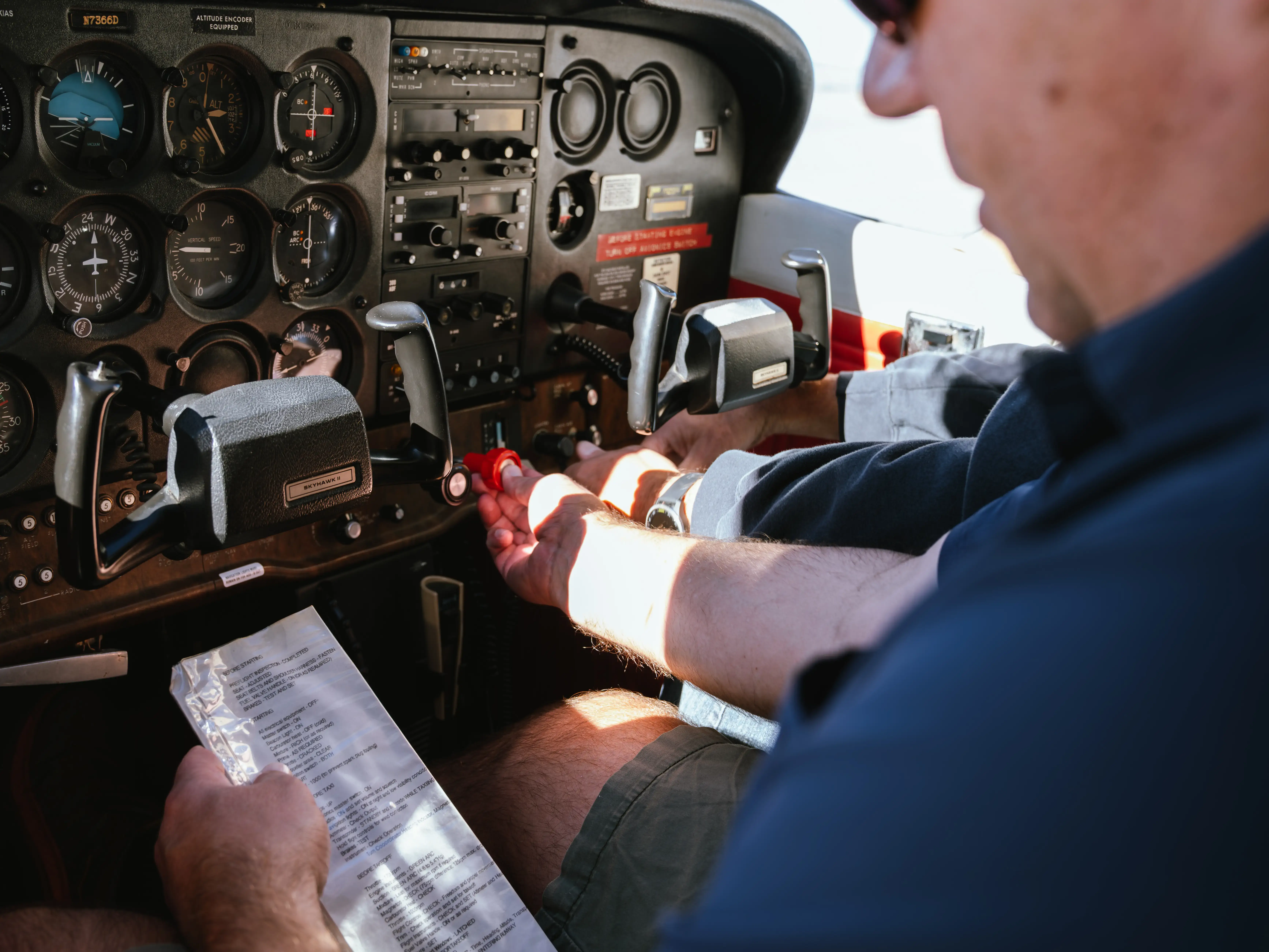
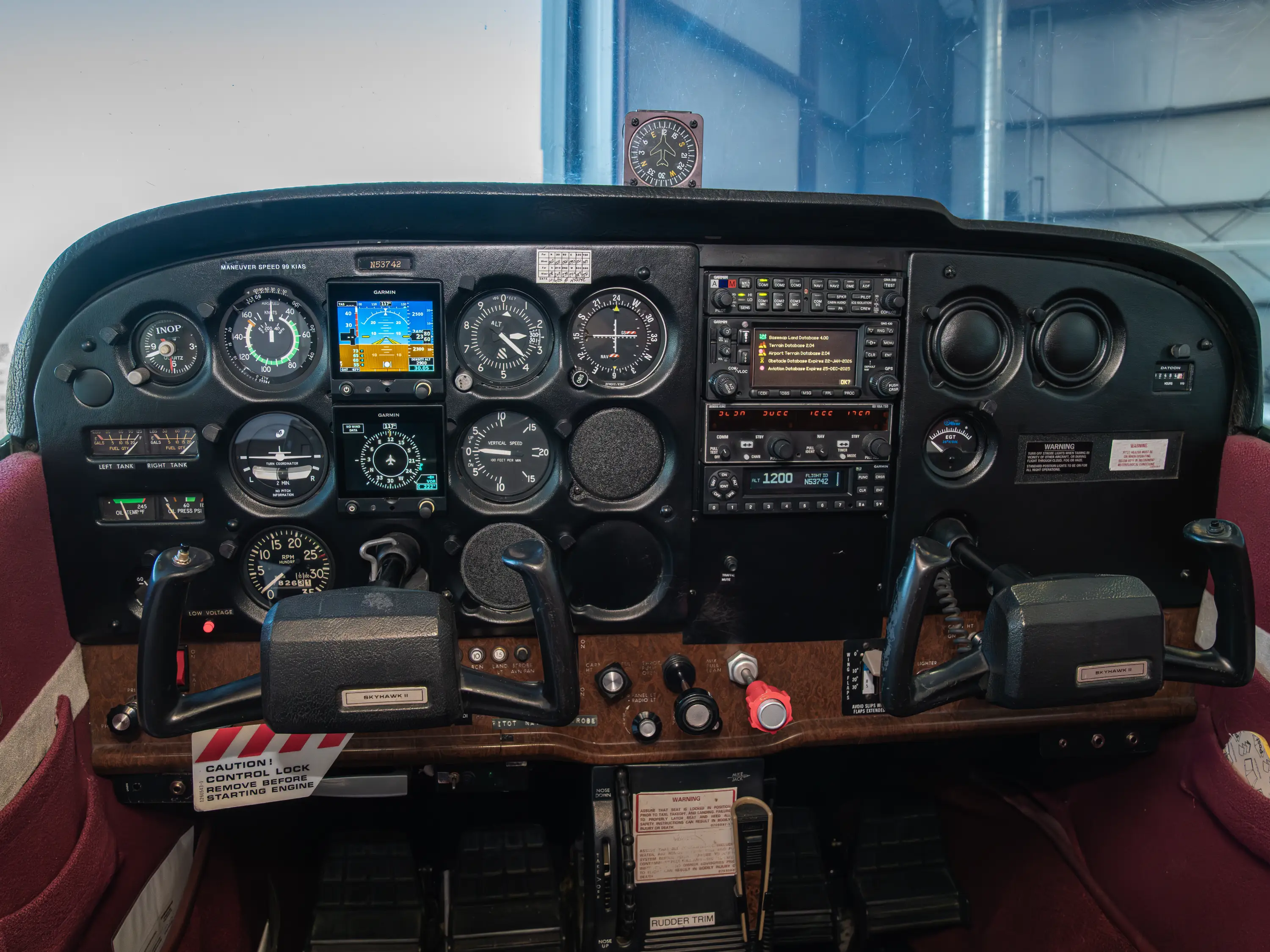
The panel. If you last flew behind six round gauges and a single nav radio, the cockpit you sit down in now may be a different instrument. Our N53742 carries a dual Garmin G5 panel, and N737DW is a certified Technically Advanced Aircraft with integrated Garmin avionics and an autopilot. The airplane flies exactly the way it always did. The information reaches you differently, and the failure modes are different. We wrote a whole post on training in a glass cockpit because that transition deserves more than a paragraph. Read it before your first flight back, not during.
The equipment rules. Under 14 CFR § 91.225, ADS-B Out has been required since January 1, 2020 in Class A, Class B, and Class C airspace, within 30 nautical miles of certain Class B airports from the surface to 10,000 feet MSL, and in Class E airspace at and above 10,000 feet MSL over the 48 contiguous states, excluding airspace at and below 2,500 feet AGL. If you stopped flying before 2020, this rule arrived entirely without you. It changes what you can legally take a non-equipped airplane into, and it is a normal thing to be caught out by.
The procedures and the paperwork. Charts moved to a tablet. Weather briefings moved off the phone. Airspace around your old home field may have been redrawn. Airport diagrams, hot spots, and runway safety guidance have all been revised more than once.
That is exactly what the ground hour of your flight review is for. A returning pilot’s ground session should be spent on what changed, not on quizzing you about what you already know. A good instructor will not spend it asking you to recite VFR cloud clearances from memory. They will spend it showing you the six things that are different from the last time you sat in a cockpit.
A Return-to-Flying Plan That Actually Works
Nobody comes back well by booking one airplane on one Saturday and hoping. Here is the order we would put it in.
1. Sort the medical first. Book the AME appointment, or start the BasicMed course and find a physician for the checklist, before anything else. It has the longest lead time and it gates everything downstream.
2. Do the ground work before you pay for airplane time. Reread the parts of Part 91 that touch the flying you plan to do. Look at the airspace around Fox Field on a current chart. Get the tablet app you are going to use loaded and working on the ground where mistakes are free. This is the cheapest hour in the whole project.
3. Fly the first hour as a reintroduction, not as a review. Airwork, a few patterns, get the feel back. Some returning pilots want their flight review to formally begin on day one; most get more out of treating the first flight as a warm-up and letting the instructor tell them when they are close.
4. Complete the flight review when the instructor is satisfied. That may be the second flight or the fifth. The endorsement comes when it comes, and it costs nothing extra to arrive there honestly. Our post on what your CFI writes after a 61.56 review covers what should be in that logbook entry when you get it.
5. Then rebuild the 61.57 currencies you actually want. Day landings first. Night landings on a dedicated evening. The IPC last, if you want your instrument privileges back.
6. Do not carry people until step 5 is done. The single most common mistake among returning pilots is putting a spouse in the right seat on flight number two because the review is signed. The review is not passenger currency.
Bring a written list of what you want to be able to do again (night trips to see family, a $200 hamburger run, IFR into the marine layer), and the plan builds itself backwards from that.
What It Costs to Come Back at Fox Field
Our Cessna 172s rent at $195 per hour wet, fuel included, and that rate is current as of publication. Instruction is billed separately from the aircraft. We run pay-as-you-go: no packages, no prepaid blocks, and no financing paperwork, which for a returning pilot is usually a feature rather than a limitation. You are not buying a program. You are buying however many hours it takes, one at a time, and stopping when you are ready.
All three of our 172s carry 180 HP engine conversions, and they are maintained on the same ramp where you will train, in our FAA Part 145 Repair Station #MHAR094E. That is worth more than it sounds to someone coming back after a layoff: momentum is fragile when you are rebuilding a skill, and a grounded airplane in an outside shop’s queue is the fastest way to turn a three-week project into a three-month one. Our maintenance and repair team works out of the same building as our instructors.
Call us at (661) 518-2700 and we will price your specific situation on today’s numbers.
Frequently Asked Questions
Do I have to redo my private pilot checkride after a long layoff?
No. Pilot certificates do not expire. What lapses is your flight review under 61.56, your medical eligibility under 61.23, and your recent flight experience under 61.57. Restore those and the certificate you already hold is fully usable again. Our 24-month rule guide covers the review side in detail.
How many hours will it take me to get current again?
There is no honest single answer, and anyone who gives you one has not met you. It depends on how long you have been away, how much you flew before, what you were flying, and how quickly the habits return. What we can tell you is how we would find out: bring your logbook to Fox Field, fly an hour with an instructor, and you will both have a realistic picture by the debrief. Contact our team and we will get that first hour on the schedule.
Can my flight review count toward my passenger-carrying currency?
The landings you make during the review count toward 61.57(a) the same as any other landings you fly as sole manipulator of the controls. They are not disqualified because an instructor was aboard. But the review itself does not restore passenger currency; three takeoffs and landings in the preceding 90 days do. If your review flight includes three landings, you have both. If it does not, you still owe them.
I have an instrument rating I have not used in years. Do I need an IPC?
Almost certainly. Under 61.57(d), a pilot who has failed to meet the instrument experience requirements for more than six calendar months can only reestablish instrument currency with an instrument proficiency check. After a multi-year gap that is not ambiguous. Plan it as its own flight, separate from your flight review.
Is BasicMed an option if I have not had an FAA medical since the 1990s?
Not directly. BasicMed under 61.23(c)(3) requires that you held a medical certificate issued under part 67 at some point after July 14, 2006. If your last one predates that, you need a new part 67 medical from an AME first, after which BasicMed becomes available to you for future flying.
What should I actually study before my first flight back?
Focus on what moved rather than on what you already know. Current airspace around the field you will fly from, ADS-B Out requirements under 91.225, whatever tablet or app you plan to use, and the specific avionics in the airplane you will rent. Our flight review and BFR FAQ covers the ground topics we work through, and the biennial flight review checklist lists the documents to bring so the ground hour goes into flying instead of paperwork.
Come Back and Fly
The gap in your logbook is not a verdict on whether you should be flying. It is a scheduling problem with a solution, and it is a much shorter solution than the one you signed up for the first time.
Bring the logbook to Fox Field, however old the last entry is. We will look at what you have, tell you what is missing, and put a realistic sequence in front of you: medical, review, currency, and whichever privileges you actually want back. Contact our team or call (661) 518-2700 to get your first hour on the schedule in Lancaster.