FAR 61.56 Exemptions 2026: When a Rating Resets Your Flight Review

Published by
Jessica Haney
Published on
Updated on
Read time
10 min read
You finished your instrument checkride in March. In October, a reminder from your old flight school lands in your inbox: your BFR is coming due. So you start hunting for a Saturday, an instructor, and an airplane.
You may not owe anybody anything.
A practical test for a new certificate, rating, or operating privilege satisfies the flight review requirement, and so does completing a phase of the FAA’s WINGS program. Neither one is a loophole. Both are written into the same regulation everyone quotes for the 24-month rule, sitting two paragraphs below the part most pilots have memorized. Every year we talk to rated pilots at Fox Field who booked a review they did not need, and to a few who assumed they were covered by something that does not actually count.
This is the part of FAR 61.56 worth knowing cold. Here is what qualifies, what does not, and how to work out your own date from your logbook instead of from somebody’s reminder email.
The Rule Is a Lookback, Not a Stamp
Most pilots carry a mental model of the flight review as a stamp with an expiration date on it. The regulation is not built that way, and the difference matters enormously once exemptions enter the picture.
Read the operative sentence in 14 CFR § 61.56(c): no person may act as pilot in command unless, since the beginning of the 24th calendar month before the month in which that pilot acts as pilot in command, they have accomplished a flight review and hold the instructor’s endorsement certifying satisfactory completion.
That is a lookback test, run fresh every single time you go flying. The question the FAA asks is never “when does your review expire?” It is “look back across the current month and the 23 months behind it. Is there a qualifying event in there?”
Which means anything the regulation accepts as a qualifying event does the same work as a flight review, on the same clock. The rule names its own exceptions right there in the first line: paragraphs (d), (e), and (g). Paragraph (d) is practical tests and proficiency checks. Paragraph (e) is the FAA’s pilot proficiency program. Paragraph (g) covers student pilots training toward a certificate with a current solo endorsement, which is why nobody sends a pre-solo student for a flight review.
Note also what 61.56(c) requires of the review itself: it has to be given in an aircraft for which you are rated, by an authorized instructor. That constraint is one of the quiet reasons the exemption paths are worth understanding: a practical test satisfies the requirement in whatever aircraft you took it in.
Exemption One: The Practical Test You Already Passed
Under 14 CFR § 61.56(d)(1), if within that same lookback period you passed a pilot proficiency check or practical test conducted by an examiner, an approved pilot check airman, or a U.S. Armed Force, for a pilot certificate, rating, or operating privilege, you do not need a separate flight review.
Notice how wide the category is. The rule does not publish a list of approved ratings; it describes a class of events, and any practical test that fits the description counts:
- Instrument rating. The single most common one we see. A pilot passes the instrument checkride, then spends the next two years thinking of the rating and the review as unrelated errands.
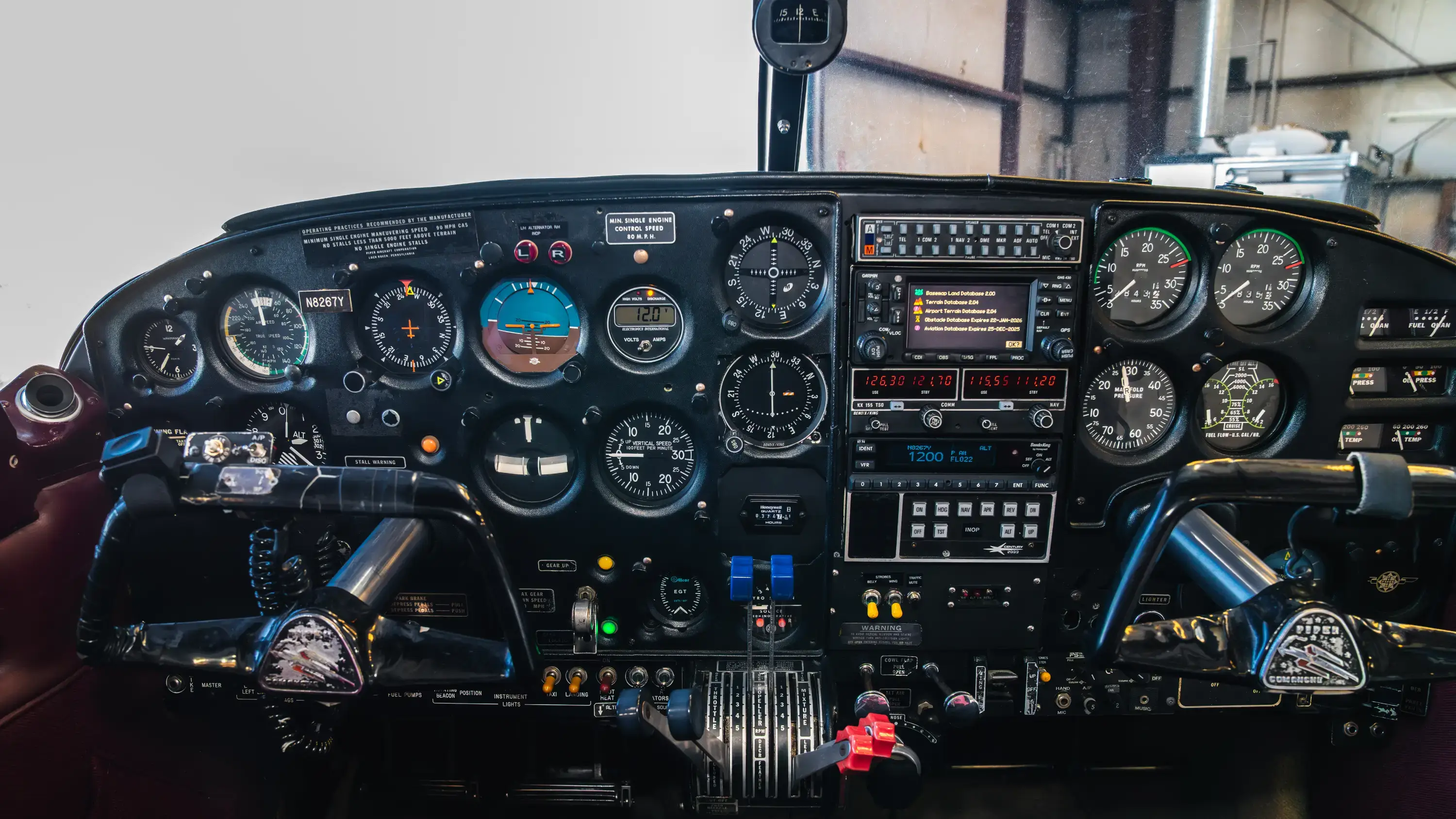
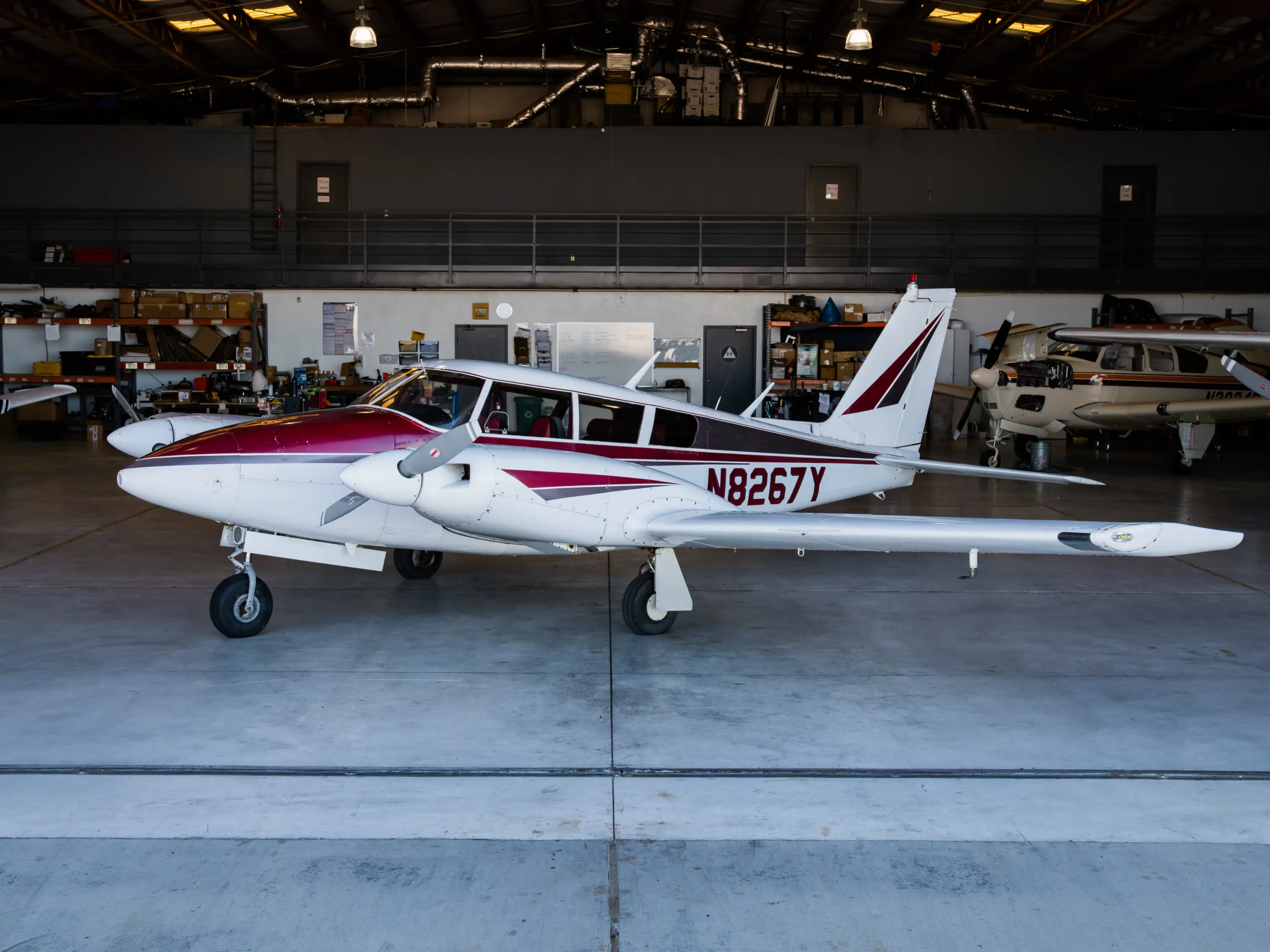
- Multi-engine add-on. An add-on rating is still a rating, and the practical test is still a practical test. Finish the add-on in our PA-30 and your 61.56 obligation is handled the same day.
- Commercial pilot certificate. A new certificate, squarely inside the category.
- ATP, a seaplane or rotorcraft add-on, or a type rating. All practical tests for a certificate, rating, or operating privilege.
- A proficiency check conducted by an approved pilot check airman or by a U.S. Armed Force. This is the paragraph that covers a lot of professional and military flying that never involves a CFI in a rented 172.
Two limits are worth being precise about. First, the test has to have been passed. A discontinued practical test is not a qualifying event, and neither is one that ended in a notice of disapproval. Those are not the same thing as a flight review that simply runs into a second session, which is a distinction we walk through in our flight review vs. checkride breakdown. Second, an endorsement is not a certificate, a rating, or an operating privilege. Getting a high-performance, complex, or tailwheel endorsement from an instructor is valuable training, but it is not a practical test conducted by an examiner, so it does nothing to 61.56.
The Instructor Paths, and the One That Only Gets You Halfway
Flight instructors get their own subparagraph, and this is where we see the most confusion, including among very experienced CFIs.
Under 61.56(d)(2), a practical test conducted by an examiner for any of the following satisfies the flight review in full:
- Issuance of a flight instructor certificate
- An additional rating on a flight instructor certificate
- Meeting the flight instructor recent experience requirements under 61.197(b)(1)
- Reinstatement of flight instructor privileges under 61.199(b)(2)
So a pilot who just earned a CFI certificate, or added a CFII or MEI, has satisfied 61.56 for the next 24 calendar months without ever sitting a flight review.
Then there is 61.56(f), which is a different animal entirely. A certificated flight instructor who renewed by satisfying the recent-experience requirements of 61.197 (most commonly by completing an approved flight instructor refresher course), or who reinstated privileges through an approved refresher course under 61.199(a)(1), need not accomplish the one hour of ground training.
Read that again. Not the review. The ground hour.
A FIRC gets you out of the ground hour. A practical test gets you out of the whole review. Paragraph (f) is not listed among the exceptions in 61.56(c), and it never says the flight review requirement goes away. A CFI who renewed online and assumed they were fully covered still owes the flight portion and the endorsement. It is a two-line distinction in the regulation and a very consequential one in the logbook.
Exemption Two: A Phase of the FAA WINGS Program
14 CFR § 61.56(e) is one sentence long: a person who has, within that same lookback period, satisfactorily accomplished one or more phases of an FAA-sponsored pilot proficiency program need not accomplish the flight review. The FAA identifies that program as WINGS, run by the FAA Safety Team at FAASafety.gov.
Here is what a phase actually is, because “complete a phase of WINGS” is the sort of instruction that sounds heavier than it is.
A phase is six credits: three Knowledge credits and three Flight credits, all earned within a 12-month window. Knowledge credits come from online courses, webinars, and FAASTeam seminars. Flight credits come from flying specific tasks to a defined standard with an instructor, who then validates the credit in the WINGS system. Let a credit sit past 12 months without finishing the phase and you have to earn that one again.
WINGS runs at three levels. Basic holds you to the private pilot standard, Advanced to the commercial standard, and Master to the ATP and instructor standard. You need a current Basic phase before an Advanced or Master phase will be granted, so almost every pilot’s first phase is a Basic one.
And the payoff, in the program’s own arithmetic: each time you complete a phase, your flight review date is extended 24 calendar months from the month in which you completed the phase. That is the same clock, restarted from the same kind of anchor.
The trade is worth thinking about honestly. A flight review is one morning and one endorsement. A WINGS phase is spread out: three ground activities you can do at your kitchen table over a few months, plus three flights with an instructor that are structured around the tasks the FAA has identified as the ones that keep hurting general aviation pilots. Some pilots want the single Saturday. Others fly more, want the structure, and would rather bank credits through the year and never think about a due date again. Both are legal. Only one of them is designed to change how you fly between reviews.
The WINGS activities themselves live on FAASafety.gov and are free. The flying has to happen somewhere. If you want to knock out flight credits in one of our Cessna 172s, call us and we will build the block around the tasks you need.

What Counts, What Half-Counts, and What Does Not Count at All
| Event | Effect on FAR 61.56 | Regulation |
|---|---|---|
| Practical test for a certificate or rating: instrument, commercial, multi-engine, ATP, type rating | Satisfies it in full; clock restarts from that month | 61.56(d)(1) |
| Pilot proficiency check by an examiner, approved check airman, or a U.S. Armed Force | Satisfies it in full | 61.56(d)(1) |
| Practical test for a flight instructor certificate, an added instructor rating, instructor recent experience, or reinstatement | Satisfies it in full | 61.56(d)(2) |
| Completing one or more phases of FAA WINGS | Satisfies it in full; extended 24 calendar months from the month of completion | 61.56(e) |
| Student pilot training toward a certificate with a current solo endorsement | No flight review required while training | 61.56(g) |
| CFI renewal or reinstatement by approved refresher course | Removes the ground hour only; the flight portion and endorsement still stand | 61.56(f) |
| Instrument proficiency check | No effect. An IPC restores instrument currency and is not on the 61.56(d) list | 61.57(d) |
| Passing a knowledge (written) test | No effect. The rule names proficiency checks and practical tests, not written exams | 61.56(d) |
| Three takeoffs and landings for passenger currency | No effect. A separate recency requirement entirely | 61.57(a) |
| A high-performance, complex, or tailwheel endorsement | No effect. An endorsement is not a practical test | 61.31 |
| Flying a lot of hours | No effect. There is no hours-based exemption in the rule | N/A |
The IPC row is the one that catches people. An instrument proficiency check is a serious, demanding event (often more demanding than a flight review), and it is genuinely easy to assume it must count for something. It does not, because it is not a practical test for a certificate, rating, or operating privilege. What the regulation does allow, in 61.56(h), is combining: the requirements of 61.56 may be accomplished together with 61.57 and other recent-experience requirements at the discretion of the instructor conducting the review. One session, two purposes, separate endorsements. Combine them freely. Just do not substitute one for the other.
Working Out Your Own Date
Forget expiration stamps and do the lookback the way the regulation does it.
Step one: find your most recent qualifying event. Flip back through your logbook for whichever came last: a satisfactory flight review endorsement, a practical test you passed, a proficiency check, or a WINGS phase completion. Not the most recent flight review. The most recent qualifying event, whatever form it took.
Step two: take the month it happened in, and count forward 24 calendar months. You are good through the last day of that month.
Say you passed your instrument checkride on March 12, 2026. In March 2028, the lookback window reaches back to the beginning of March 2026, and your checkride is inside it. In April 2028, the window has moved to the beginning of April 2026, and it is not. So you are covered through March 31, 2028. The day of the month you flew is irrelevant, which is the whole point of counting in calendar months.
Step three: know what happens if the date passes. Nothing happens to your certificate. It does not expire, lapse, or need reinstating. You simply cannot act as pilot in command until you complete a review. The FAA’s own guidance is explicit on the other side of this too: a pilot who has not yet received a satisfactory-review endorsement may keep exercising their privileges as long as 24 calendar months have not elapsed since one of the qualifying events. The clock is the thing that governs, not the appointment on your calendar.
If you want the requirement itself laid out end to end, our FAR 61.56 flight review guide covers the 1-hour ground and 1-hour flight baseline and what your instructor signs, and our flight review FAQ answers the questions pilots bring us most often.
When the Answer Is “You Do Need One”
Plenty of pilots run this exercise and land exactly where they expected: no checkride in two years, no WINGS phase, no proficiency check. That is the normal case, and it is not a problem to solve. It is a morning to book.
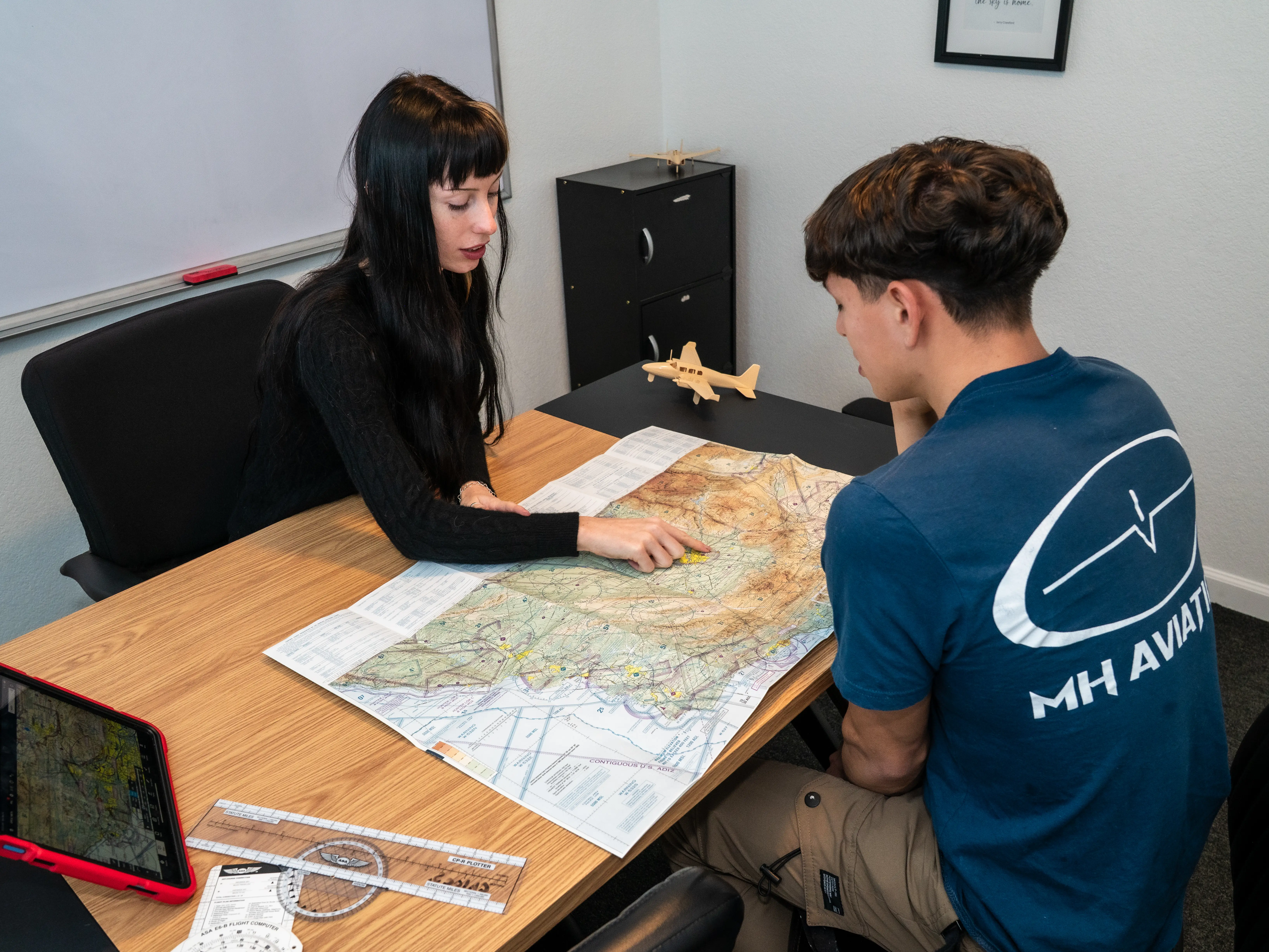
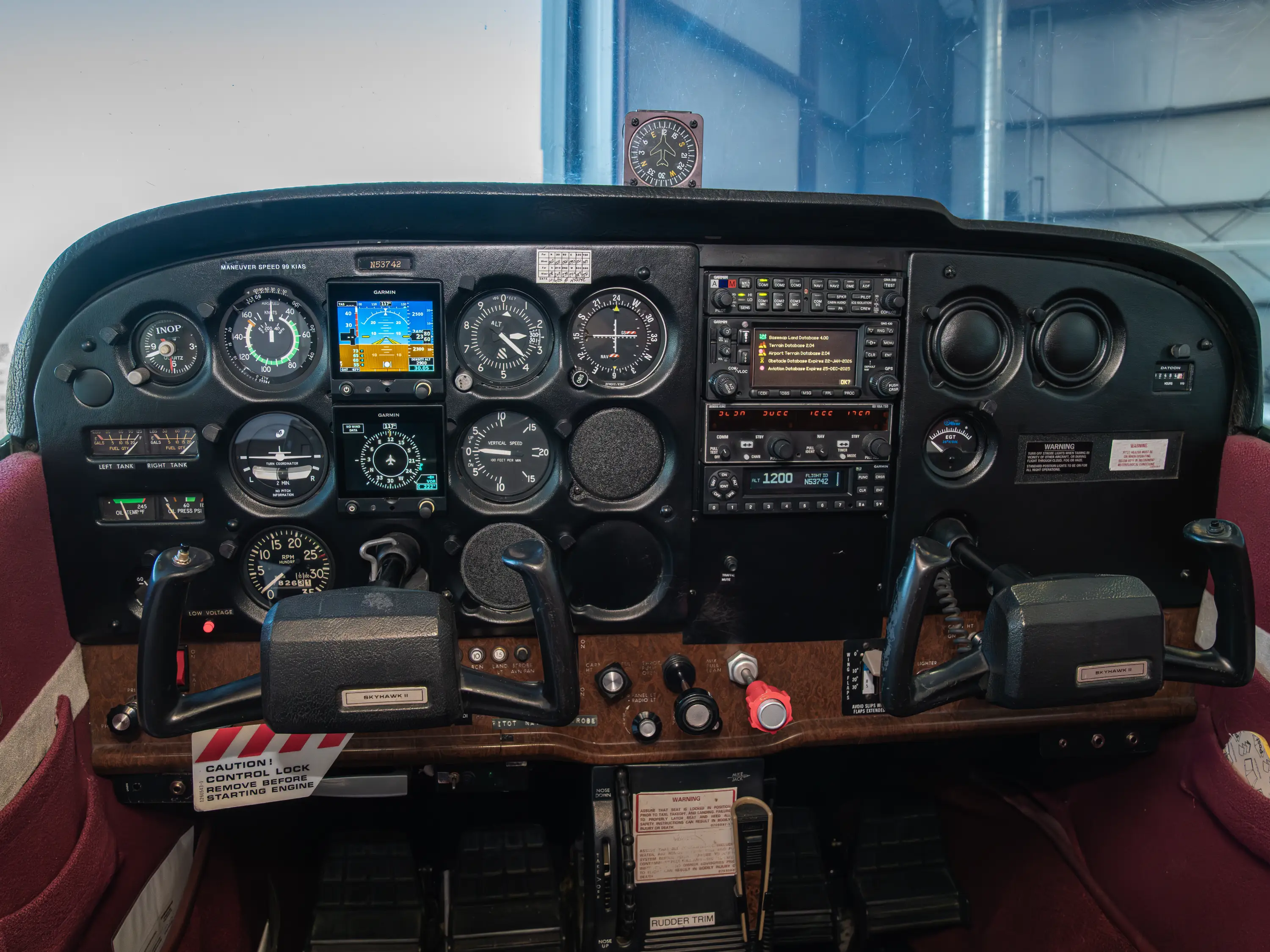
We schedule flight reviews at General William J. Fox Airfield (KWJF) as instruction, not as an appointment with a verdict. The ground hour comes first in a briefing room with a sectional on the table, built around the flying you actually do. Then we fly. If you do not own an airplane, our three Cessna 172s (N53742, N7366D, and N737DW) all carry 180 HP conversions, and N737DW is a Technically Advanced Aircraft with dual Garmin G5s and an integrated autopilot. Our single-engine wet rate is $195 per hour, fuel included, and our PA-30 twin is $305 per hour wet. Instruction is billed separately. Those rates are current as of publication. Call us at (661) 518-2700 and we will confirm today’s number.
We run pay-as-you-go with no packages and no financing, so a review that turns into two sessions is billed as two sessions. And because our FAA Part 145 Repair Station sits on the same ramp where you train, an airplane with a squawk gets looked at here rather than waiting in an outside shop’s queue, which is the difference between rescheduling a currency flight by a day and losing a month of it.
If you would rather walk in prepared, our biennial flight review checklist lists the documents and study topics, and our flight review and BFR page covers the exemptions, the endorsement, and scheduling in one place.
Frequently Asked Questions
Does passing a checkride count as a flight review?
Yes, if it was a practical test or proficiency check conducted by an examiner, an approved pilot check airman, or a U.S. Armed Force for a pilot certificate, rating, or operating privilege. Under 61.56(d)(1) you do not need a separate flight review for 24 calendar months from the month you passed it.
Does an instrument rating reset my flight review?
It does. The instrument practical test is a practical test for a rating, so it satisfies 61.56 the day you pass it. If you are planning an instrument rating this year, your flight review is already handled as a byproduct.
Does a multi-engine add-on count?
Yes. An add-on rating is a rating, and its practical test falls inside 61.56(d)(1). We fly multi-engine training in our PA-30 at Fox Field, and pilots who complete the add-on walk away with the rating and 24 fresh calendar months of pilot-in-command privileges.
Does completing FAA WINGS really satisfy the flight review?
Yes, under 61.56(e). One phase is three Knowledge credits and three Flight credits earned within 12 months, with the flight activities validated by an instructor. Completing a phase extends your flight review date 24 calendar months from the month you finished it.
I renewed my CFI with a refresher course. Am I done?
Not entirely. Under 61.56(f), completing the flight instructor recent-experience requirements or reinstating privileges through an approved refresher course removes the one hour of ground training, but not the flight portion or the endorsement. If you instead passed a practical test for an instructor certificate, an added instructor rating, recent experience, or reinstatement, 61.56(d)(2) covers the entire review.
Does an instrument proficiency check count?
No. An IPC is a 61.57(d) instrument-currency event and is not among the practical tests and proficiency checks listed in 61.56(d). You can absolutely do both in one session, since 61.56(h) permits combining 61.56 with other recency requirements at the instructor’s discretion, but each needs its own endorsement.
If I am exempt, do I still need to be current for passengers?
Yes. The 61.56 exemptions say nothing about 61.57 passenger-carrying recency, night currency, or your medical or BasicMed. Satisfying the flight review through a checkride or a WINGS phase resolves one requirement, not all of them.
How do I find out if I am already current?
Look for the most recent qualifying event in your logbook, take the month it happened, and add 24 calendar months. If you would rather have another set of eyes on it, send us a note with what is in the back of your logbook and we will tell you whether you owe a review or a phone call to celebrate.
Check Your Logbook Before You Book Anything
The FAA wrote 61.56 to reward pilots who keep training. Earn a rating, pass a proficiency check, or work through a phase of WINGS, and the regulation treats that as proof you have done more than a flight review would have asked of you, because you have.
So before you scramble for a Saturday, spend five minutes with your logbook. Find the last qualifying event, count forward 24 calendar months, and see where you stand. You may have another year of pilot-in-command privileges you did not know about. You may find a CFI renewal that covered the ground hour and nothing else. Either way, you will be flying on the calendar the regulation actually keeps instead of the one in your head.
If the count comes up short, reach out through our contact page and we will get your flight review on the schedule at Fox Field.