What Is a Part 145 Repair Station and Why It Matters for Student Pilots

Published by
Jessica Haney
Published on
Updated on
Read time
9 min read
Nobody tells you this when you start looking at flight schools.
You compare hourly rates. You look at aircraft photos. You read a few reviews. Then you sign up, pay your first block of hours, and book your first lesson.
Three weeks later, your scheduled flight is canceled. The plane has a squawk. The school sent it to an outside shop. Could be a week. Could be longer. They’re not sure.
That gap costs you more than one lesson. It costs you momentum, retention, and money you’ve already paid for ground school. Do it enough times, and you become one of the students who quits before they solo.
The aircraft maintenance operation behind a flight school is one of the biggest factors in how fast you actually finish your training. Most students never ask about it before they enroll.
Why Flight Training Takes Longer Than It Should
The FAA requires a minimum of 40 hours to earn your Private Pilot Certificate. The national average is closer to 60 to 70 hours. That 20-to-30-hour gap doesn’t exist because students are slow learners.
It exists because of the real-world friction that most flight schools create by default:
- Marine layer weather grounds coastal California schools for days at a time
- Scheduling bottlenecks make it hard to fly consistently at busy urban airports
- Maintenance delays ground aircraft for weeks while the school waits on an outside mechanic
The third item is the one students don’t know to look for. A broken magneto, a failed avionics component, or a routine inspection that reveals a squawk can take a plane out of service for days or weeks when the school has no control over the repair queue.
In that window, your skills erode. You forget the things you practiced. Your next lesson becomes a review lesson. And you pay again for ground you already covered.
What a Part 145 Repair Station Actually Is
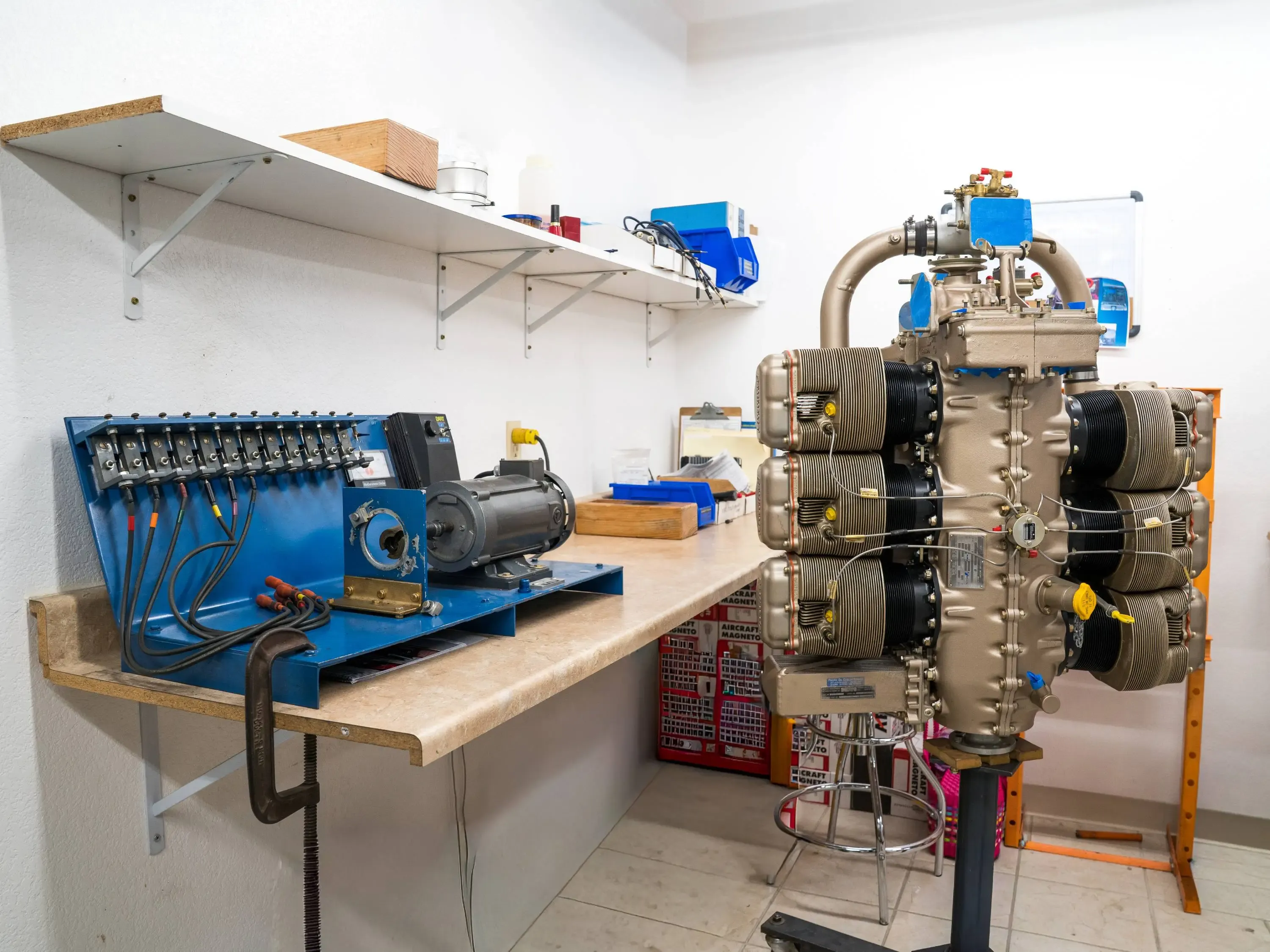
A Part 145 repair station is an FAA-certificated maintenance facility. To earn and keep that certificate, the station must maintain:
- An approved Repair Station Manual with documented procedures
- A Quality Control Manual covering inspection, corrective-action, and calibration standards
- Calibrated test and inspection equipment
- Documented employee training and personnel accountability records
- Return-to-service authority tied to the facility’s operations specifications and ratings
What that means in plain terms: a Part 145 station is not just a mechanic with a good reputation. It is a facility-level maintenance system with documented oversight, quality control processes, and an FAA certificate number on the line.
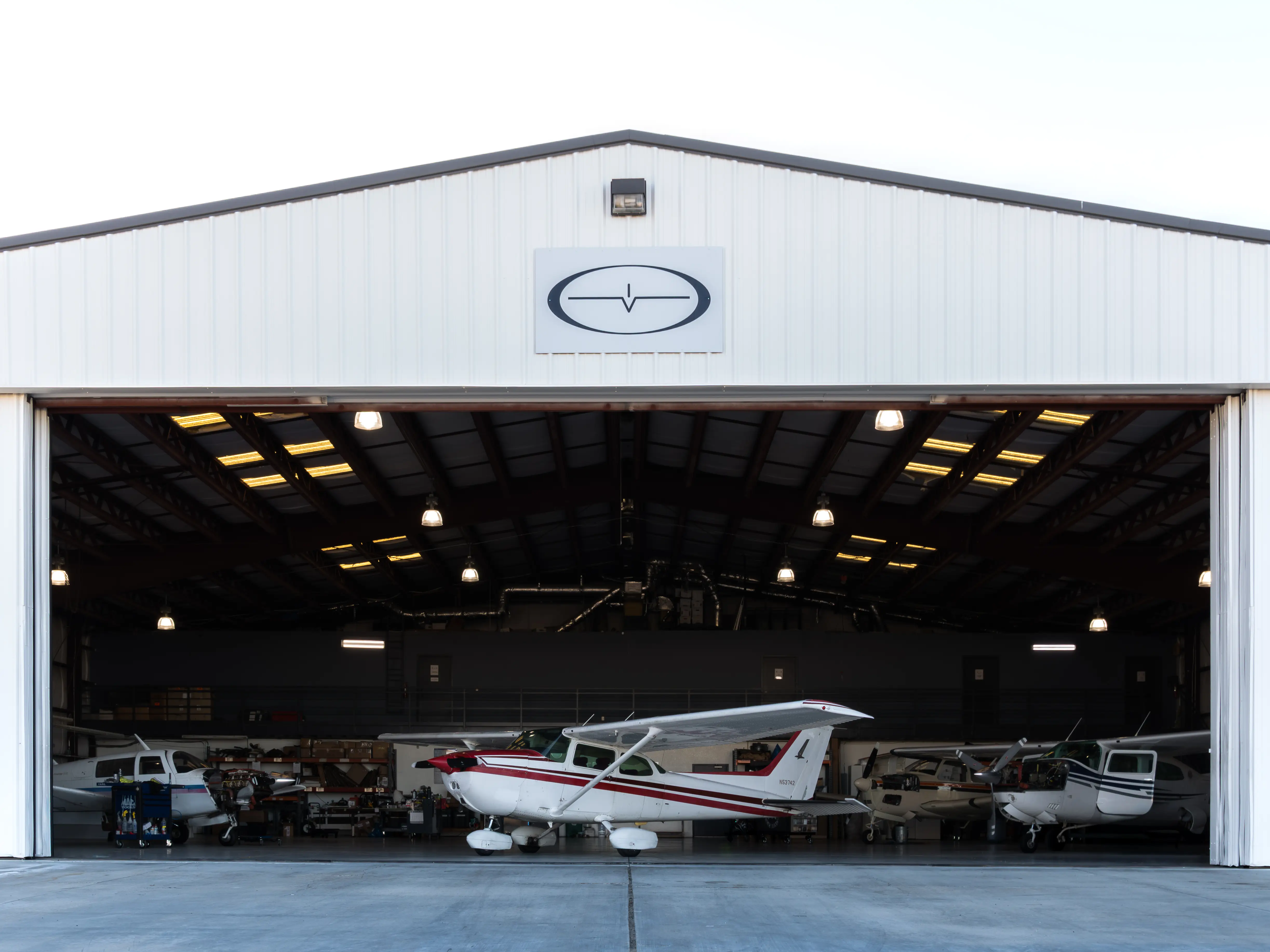
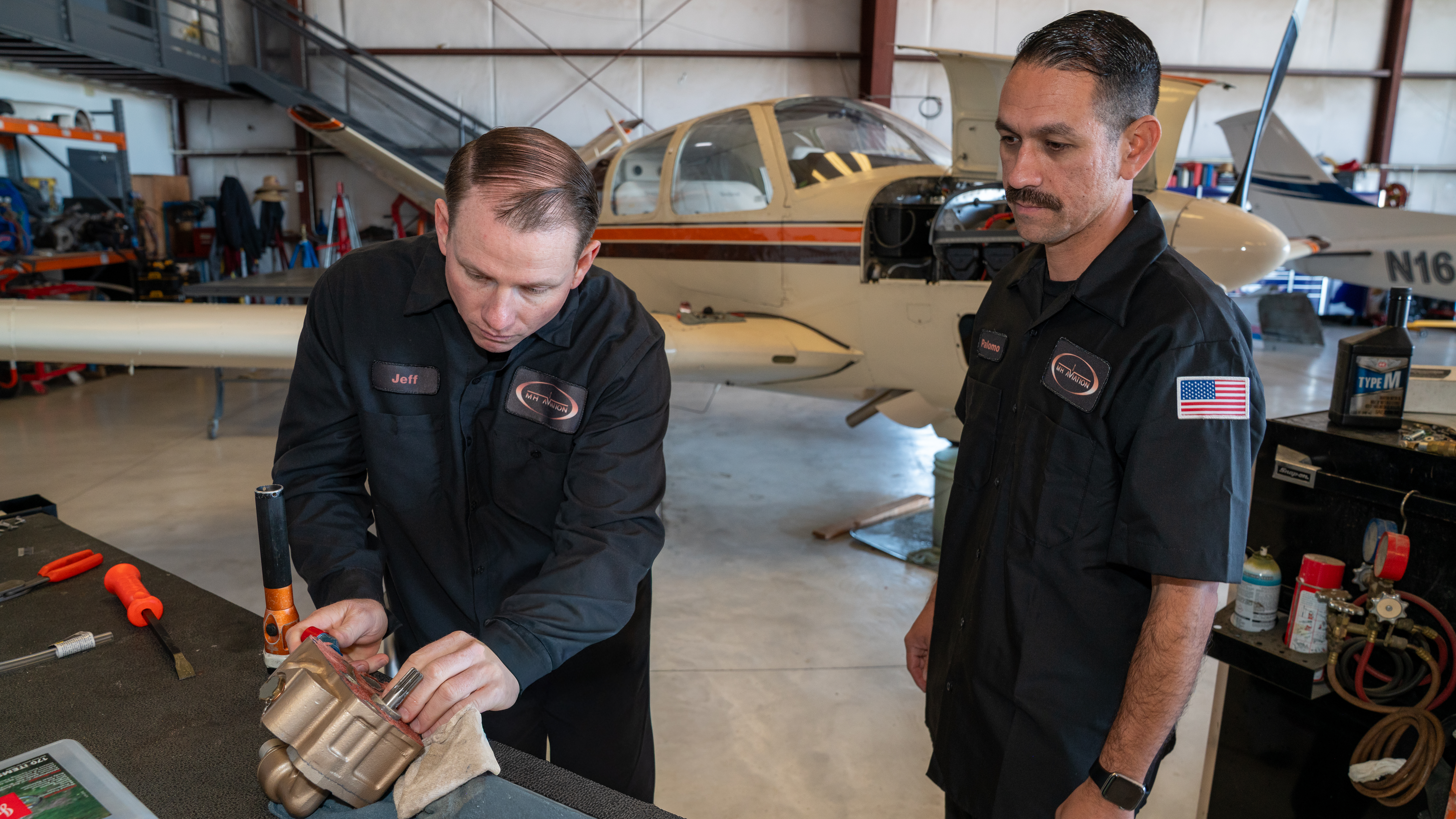
MH Aviation operates as FAA Part 145 Certified Repair Station #MHAR094E here at Fox Field (KWJF) in Lancaster, CA. That certificate is tied to our work on the school fleet, privately owned aircraft, and local aerospace partners.
The Direct Benefit to Your Training Timeline
Here is the practical upside for a student.
When a training aircraft develops a squawk at a school without its own shop, the sequence looks like this:
- Squawk identified
- Plane grounded
- Outside shop contacted
- Appointment scheduled
- Aircraft transported or ferried
- Outside shop works through its own backlog
- Aircraft returned and re-inspected for airworthiness
- Aircraft returned to service
That sequence can take a week or more, sometimes two, depending on parts availability and the outside shop’s workload.
At MH Aviation, the sequence is shorter:
- Squawk identified
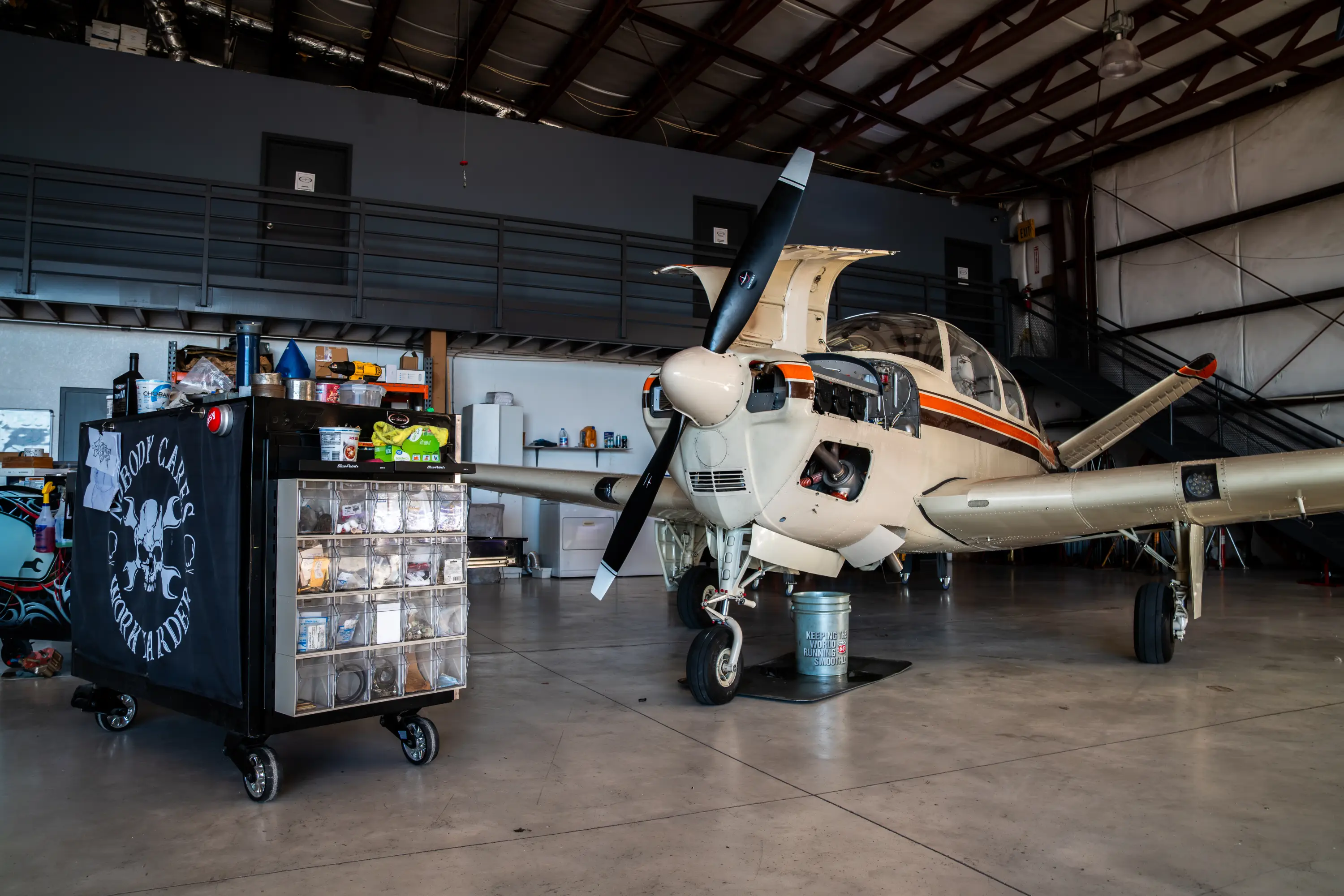
- Our own mechanics assess it immediately
- Parts are sourced and the repair is prioritized
- Aircraft returned to service
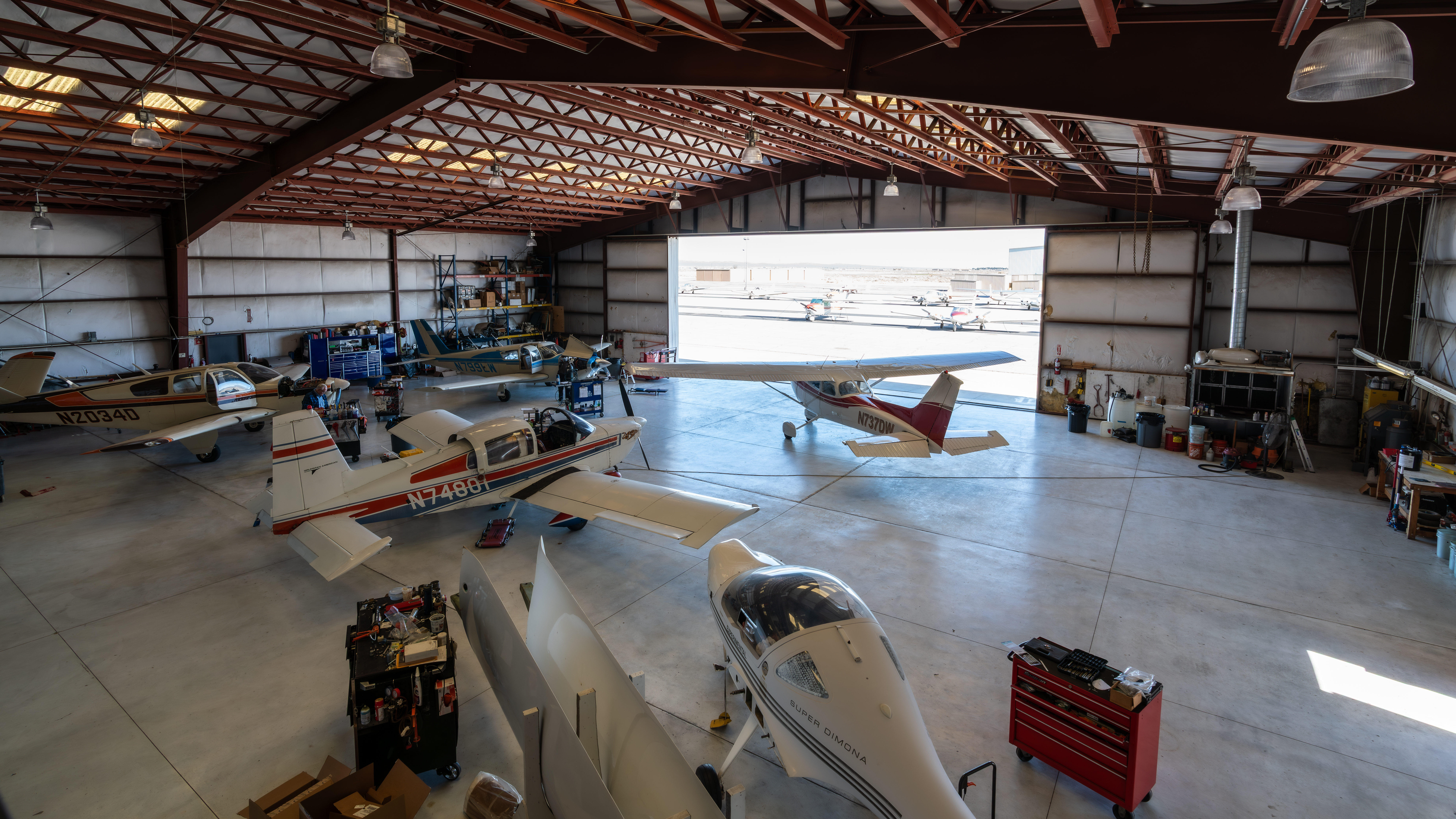
We own the shop, so our school fleet gets priority. That is not a marketing phrase. It is an operational fact that directly affects how often your flight is available to you.
Questions to Ask Before You Enroll Anywhere
Use these questions when evaluating any flight school, including ours. They will tell you more than any photo of the cockpit:
1. Do you have in-house maintenance or do you use an outside shop? The answer tells you who controls the repair timeline when a plane goes down.
2. How long is your average maintenance turnaround when a plane gets grounded? A school with in-house mechanics will have a concrete answer. “It depends on the outside shop” is the answer you don’t want.
3. What is your average cancellation rate due to maintenance? Some schools track this. Many don’t. If they can’t tell you, that’s information too.
4. How many aircraft do you operate in the training fleet? More aircraft gives you a safety net when one is down. A school with two planes and no in-house maintenance is a scheduling risk.
5. Is your aircraft rental rate wet (fuel included)? This affects your actual cost per lesson and your ability to budget accurately. Our competitive rates page breaks this down for each aircraft in our fleet.
The Weather Advantage Is Only Worth Something If the Planes Are Flying
At MH Aviation, one of our core advantages is the weather at Fox Field (KWJF). The Antelope Valley High Desert averages 300+ flyable days per year. That is meaningfully more than the coastal LA Basin, where the marine layer regularly cancels morning flights.
But a clear sky does not help you if your assigned aircraft is grounded in a maintenance queue.
Our Part 145 repair station and our 300+ flyable days are two parts of the same promise: when your lesson is scheduled, you are flying. That consistency is what keeps students on track from their first solo all the way through their commercial certificate and beyond.
What This Looks Like on the Career Track
If you are pursuing the Zero to Airlines track, this matters even more.
The program is designed to take you from your first flight to your 1,500-hour airline minimums in a structured sequence:
- Phase 1: Private Pilot Certificate
- Phase 2: Instrument Rating
- Phase 3: Commercial Pilot License
- Phase 4: CFI Certificate
- Phase 5: Time Building as an Instructor (up to 80–100 hours per month)
- Phase 6: Airline Transition and ATP
Every phase depends on the previous one finishing on schedule. A two-week maintenance delay in Phase 1 doesn’t just cost you two weeks. It pushes every subsequent phase, delays your CFI hire date, delays your hour-building start, and delays the seniority number you earn when you finally reach a regional carrier.
Airline seniority is everything in this industry. Your captain upgrade timeline, your base assignment, your schedule quality, and your quality of life over a 30-year career are all tied to when your seniority number starts. Starting that number six months later because your school’s fleet was chronically grounded is a cost you won’t see until it’s already happened.
The Part 145 Credential in the Bigger MH Aviation Picture
Beyond the training benefit, our Part 145 certification is a trust signal that goes beyond the flight school side of the operation.
We provide what Lockheed Martin recognizes as G.O.A.T. Support (Greatest of All Time) for their local flight operations at Fox Field. That relationship is built on the same maintenance standards, quality control practices, and technician accountability that we apply to every aircraft in our fleet, whether it belongs to a student, a private owner, or an aerospace partner.
For you as a student, the simplest version of that context is this: the people maintaining your training aircraft have earned trust in a demanding aerospace environment. The Cessna 172 you train in is held to the same documentation and quality control standards applied to far more complex aircraft.
That is not a guarantee that nothing will ever break. Aviation is a mechanical field, and mechanical things require maintenance. It is a guarantee that when something needs attention, it is addressed by a documented, accountable system, not improvised by whoever is available.
How to Confirm This Before You Commit
When you visit any flight school — or contact ours — here is how to confirm the maintenance picture before you pay for your first block of hours:
- Ask directly: “Do you have an in-house maintenance facility or do you use outside shops?”
- Ask to see or be told about the school’s current fleet size and maintenance staffing.
- Ask: “How quickly can you typically get a grounded training aircraft back in service?”
- Review the school’s cancellation policy and whether maintenance cancellations are handled with makeup credit or lost hours.
At MH Aviation, we welcome those questions. Our contact page or our intro flight is the right place to start that conversation in person, on the ramp at Fox Field, before you commit to anything.
FAQ: Part 145 and Flight School Maintenance
What is a Part 145 repair station?
A Part 145 repair station is an FAA-certificated maintenance facility that operates under documented manuals, quality control systems, calibrated equipment standards, and personnel accountability requirements. It is not the same as a mechanic working independently. The certificate adds a facility-level oversight system around all the maintenance work.
Does it cost more to train at a school with in-house maintenance?
Not necessarily. Our Cessna 172 wet rate is $195/hr, which is competitive with regional schools that use outside maintenance. In-house maintenance reduces mechanical cancellations, which is a direct training-cost savings over a full program.
How many aircraft does MH Aviation operate?
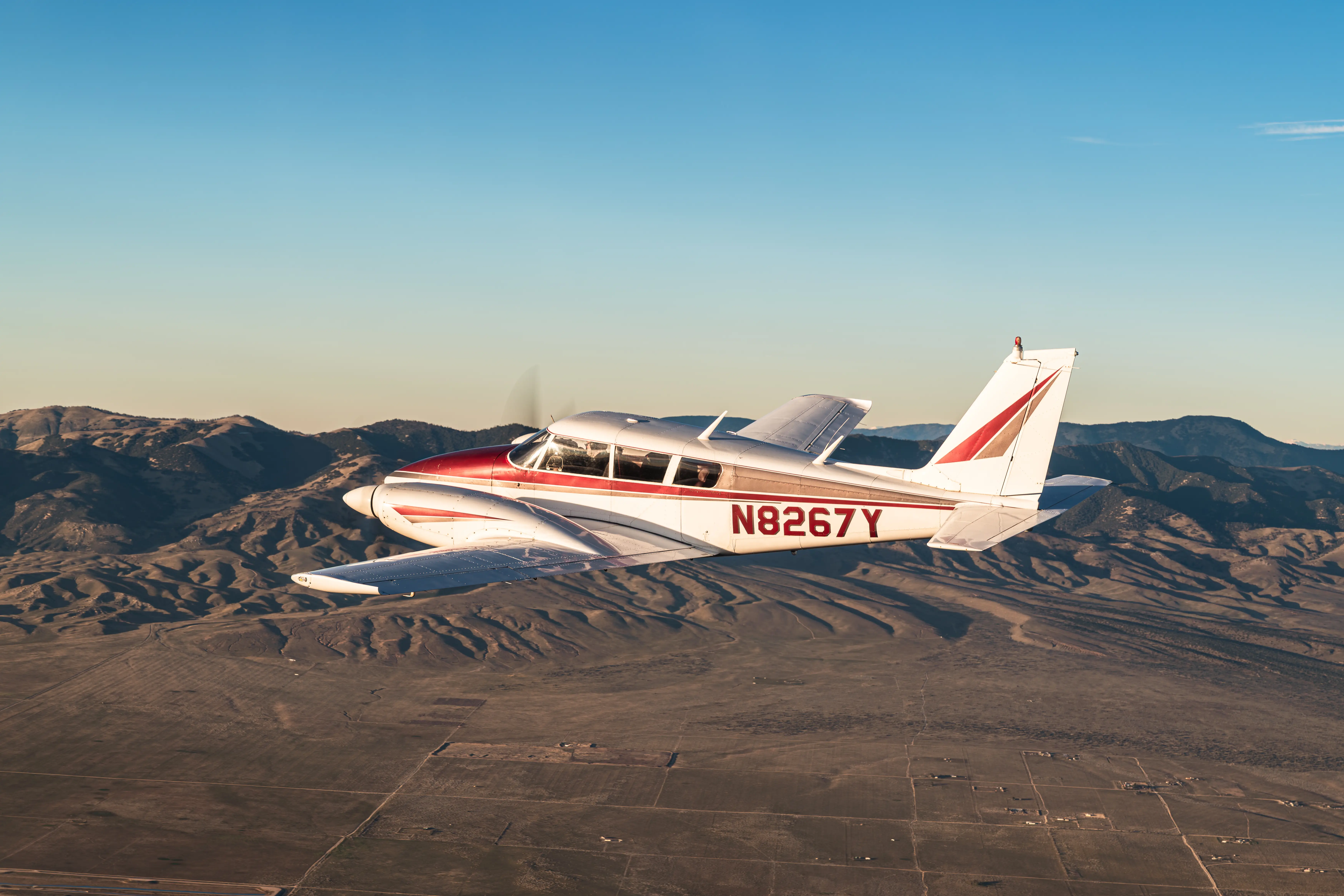
We operate a fleet of Cessna 172s and a Piper Twin Comanche PA-30 for multi-engine training. Contact our team directly for current fleet availability before booking.
What is the connection between Part 145 and training fleet reliability?
When a school owns its maintenance facility, the training aircraft are first in line for repairs. That means faster turnaround when a squawk is found and fewer extended groundings. For students on the Zero to Airlines track, that reliability is a meaningful difference in how long the full program actually takes.
Is MH Aviation the only school in the area with in-house maintenance?
We believe we are the only Part 145 Repair Station-backed flight school in the Antelope Valley, though we encourage prospective students to confirm the maintenance situation at any school they visit.
Your Training Timeline Is Partly a Maintenance Decision
You control some parts of your timeline. You control how consistently you show up. You control how much ground study you put in between lessons. You control which school you choose.
You cannot control whether a training aircraft breaks. But you can choose a school where the maintenance system is built to minimize how long it stays broken.
Book an intro flight at Fox Field or contact our team to see the operation in person before you commit.