Aviation Safety Standards FAQs
The most common safety questions new pilots ask us, answered in plain language.
Frequently Asked
Questions
Aviation SafetyWhat makes MH Aviation's approach to aircraft maintenance different?
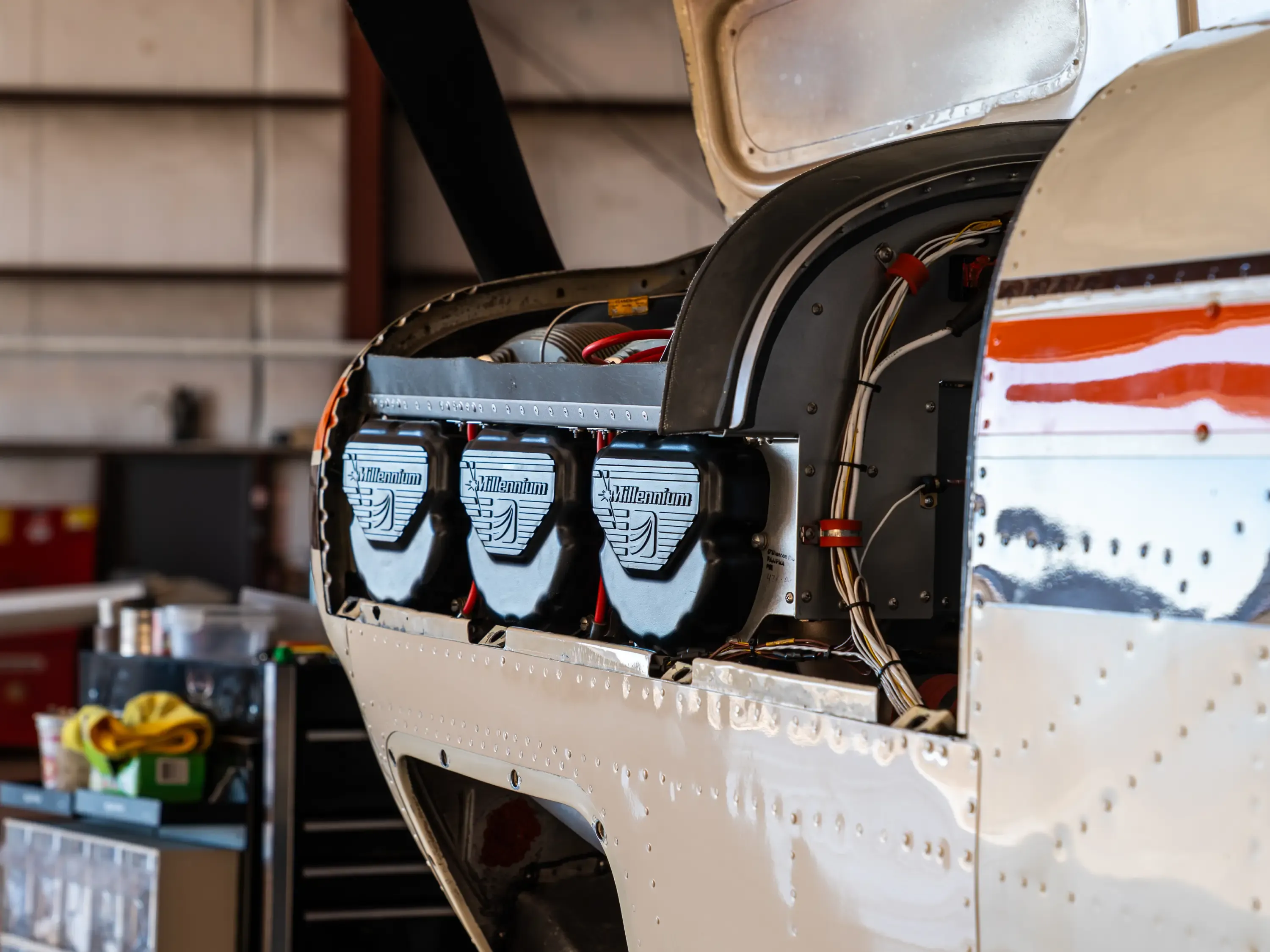
We are a full-service FAA Part 145 Repair Station located directly at Gen. William Fox Airfield (KWJF), not just a flight school that contracts maintenance out. Our own Chief Inspector and technicians perform Annual, 50-hour, and 100-hour inspections in-house, so the same team responsible for keeping the fleet airworthy is invested in your training day to day. See the full picture on our aviation safety standards page.
Aviation SafetyIs learning to fly a small aircraft actually safe?
Flight training is a structured, closely supervised activity. Every lesson follows an FAA-approved curriculum, every maneuver is briefed before you fly it, and a certificated instructor is with you the entire time until you're cleared to solo. Combine that with an aircraft that is inspected far more frequently than a personal-use car, and training flights are one of the most closely monitored ways to spend time in the air.
Aviation SafetyHow often are the training aircraft actually inspected?
Beyond the FAA-required Annual Inspection, we perform 50-hour and 100-hour inspections on our training fleet — well beyond what a typical personal aircraft owner might schedule. Because our repair station is on-site, small squawks get addressed immediately instead of waiting for an outside shop opening.
Aviation SafetyWhat kind of safety training do MH Aviation instructors go through?
Our Certified Flight Instructors (CFIs) are FAA-certificated and trained to teach risk management alongside stick-and-rudder skills from your very first lesson — including preflight risk assessment, weather decision-making, and emergency procedures. Instruction is delivered under FAA Part 61, which allows your CFI to tailor the pace of training to your progress while still meeting every required safety milestone.
Aviation SafetyDoes Fox Field's location and weather actually make training safer?
Yes. Fox Field (KWJF) sits in the High Desert and enjoys over 300 flyable days a year, which keeps students out of the marine-layer fog and traffic congestion that ground or complicate training near the LA Basin. More consistent weather and less congested airspace mean fewer rushed decisions and more time to fly at a steady, unhurried pace.
Aviation SafetyDoes training under Part 61 instead of Part 141 affect safety oversight?
No — both are FAA-regulated training structures that must meet the same certification standards to earn a rating. Part 141 follows a more rigid, pre-approved syllabus, while Part 61 (our training structure) gives instructors flexibility to adapt the pace to each student. Every safety milestone, endorsement, and checkride requirement is still governed by the FAA regardless of which part a school trains under.
Aviation SafetyHow does modern avionics equipment improve safety?
Our fleet has been upgraded with Garmin G5 glass cockpits and 180 HP engine conversions. Glass cockpits give students clearer situational awareness of attitude, altitude, and systems than older analog gauges, while the engine upgrade provides stronger climb performance and safety margins, especially in the High Desert's higher density altitude.
Aviation SafetyI saw news about a nearby aviation accident — does that mean flight training is dangerous?
It's natural to feel uneasy after seeing an aviation accident in the news, but most headline-making incidents involve military, experimental, or unrelated commercial operations, not FAA-regulated flight training. Student and instructional flying is one of the most heavily supervised segments of aviation, with a certificated instructor onboard, standardized training aircraft, and a curriculum built specifically around managing risk. We go into more depth in our guide on whether general aviation is safe, and our team is always happy to talk through exactly what safety measures apply to training here.
Aviation SafetyIs it safe to practice engine-out procedures and other emergency maneuvers?
Yes. All simulated emergencies, including engine-out procedures in our multi-engine aircraft, are practiced at safe altitudes and follow FAA Practical Test Standards (ACS). For multi-engine training specifically, we use 'zero-thrust' throttle settings to simulate a feathered propeller without actually shutting down the engine, so you get realistic practice in a controlled environment.
Aviation SafetyWhat FAA oversight applies to MH Aviation beyond flight training?
Operating as an FAA Part 145 Repair Station means our maintenance operation is held to additional oversight, documentation, and quality-control requirements beyond a standard maintenance shop. Combined with FAA Part 61 flight instruction standards, both halves of our business — training and maintenance — answer directly to FAA regulation.
Still have questions?
Get in Touch
With Our Team
Our instructors are ready to help you navigate your flight training questions and plan your path.
Call us at (661) 518-2700