How Old Do You Have to Be for a Discovery Flight in 2026?
Published by
Jessica Haney
Published on
Updated on
Read time
8 min read
A 13-year-old who cannot stop talking about airplanes. A 55-year-old who always wanted to fly and assumes the window has closed. If you are either one, or the parent of the first, you are asking the same question: am I the right age for a discovery flight? The short answer is that the FAA sets no minimum age to fly with a certified instructor, and no maximum age to learn. The age rules that matter come later, when a student flies solo and earns a license.
This guide walks through every age milestone, from a first flight at Fox Field to a private pilot certificate, so parents and adult beginners know exactly where they stand. At MH Aviation, the first step is our Intro Flight: $199 for about 45 minutes in the plane and 30 minutes on the ground.
The FAA age milestones, from first flight to license
Flying has three age milestones under FAA rules. Knowing them helps you plan, especially for a teenager who wants to move fast.
| Milestone | FAA minimum age (airplane) | What it allows |
|---|---|---|
| Flight with an instructor | None | A discovery flight or lessons, with the instructor in command |
| Student pilot certificate | 16 | Flying solo once your instructor signs you off |
| Private pilot certificate | 17 | Flying on your own and carrying passengers, not for pay |
The first row is the one that matters for a discovery flight. You do not need a student pilot certificate to take a lesson. The FAA requires it only before you fly solo. The FAA’s student pilot certificate page lays out the rules, including the age of 16 for airplanes.
The private pilot certificate has its own age minimum of 17. A student can train before then, but cannot take the final test and earn the license until that birthday. Our private pilot program page explains what the training includes.
Why schools set their own age policies for young flyers
The FAA leaves the youngest ages up to schools. That is why age policies differ from one school to the next. Each school weighs what works in its aircraft: whether a child can see over the panel, reach the controls comfortably, and stay focused for 45 minutes.
If you are booking for a child or a younger teen, contact us before you book. Our team will talk through what works for their age and size, so the day is a good one. You can reach us on our contact page.
For most teenagers, the timing works well. A first flight at 14 or 15 gives them a year or more to decide whether they want to train. If they do, they can build lessons toward solo at 16 and the private pilot test at 17.
A smart timeline for teens who want to fly
Here is how a motivated teenager might use those milestones. Nothing has to happen this fast, but it shows what is possible.
- Around 14 or 15: Take an Intro Flight. See whether flying feels as good as it looks.
- Before 16: Start lessons if the interest sticks. Time logged with an instructor can count toward the private pilot certificate.
- At 16: Get a student pilot certificate and a medical certificate, then fly solo once the instructor signs off.
- At 17: Take the knowledge test and the checkride (the final flight test with an FAA examiner) for the private pilot certificate.
For teens thinking about a career, the private certificate is the first rung. Our Zero to Airline program shows how the next ratings stack up, and our guide to what happens on a discovery flight is a good read before the first visit.
Is there an age limit at the other end?
No. The FAA does not set a maximum age for a student pilot or a private pilot. Plenty of people learn to fly in their 40s, 50s and later, often once the kids are grown or a career has slowed down.
What matters for older students is medical eligibility, not age. Before flying solo, most airplane students need an FAA medical certificate from an aviation medical examiner. A third-class medical, the type most private pilots use, generally lasts 60 calendar months if you are under 40 on the exam date and 24 calendar months if you are 40 or older. If you have a health question, an aviation medical examiner is the right person to ask.
For a discovery flight, none of that applies yet. You do not need a medical certificate to fly with an instructor. Many adult students take an Intro Flight first and deal with the medical only once they decide to train.
If you are an adult weighing a career change into aviation, that same order makes sense. Fly once, then plan.
How to prepare a young flyer for the big day
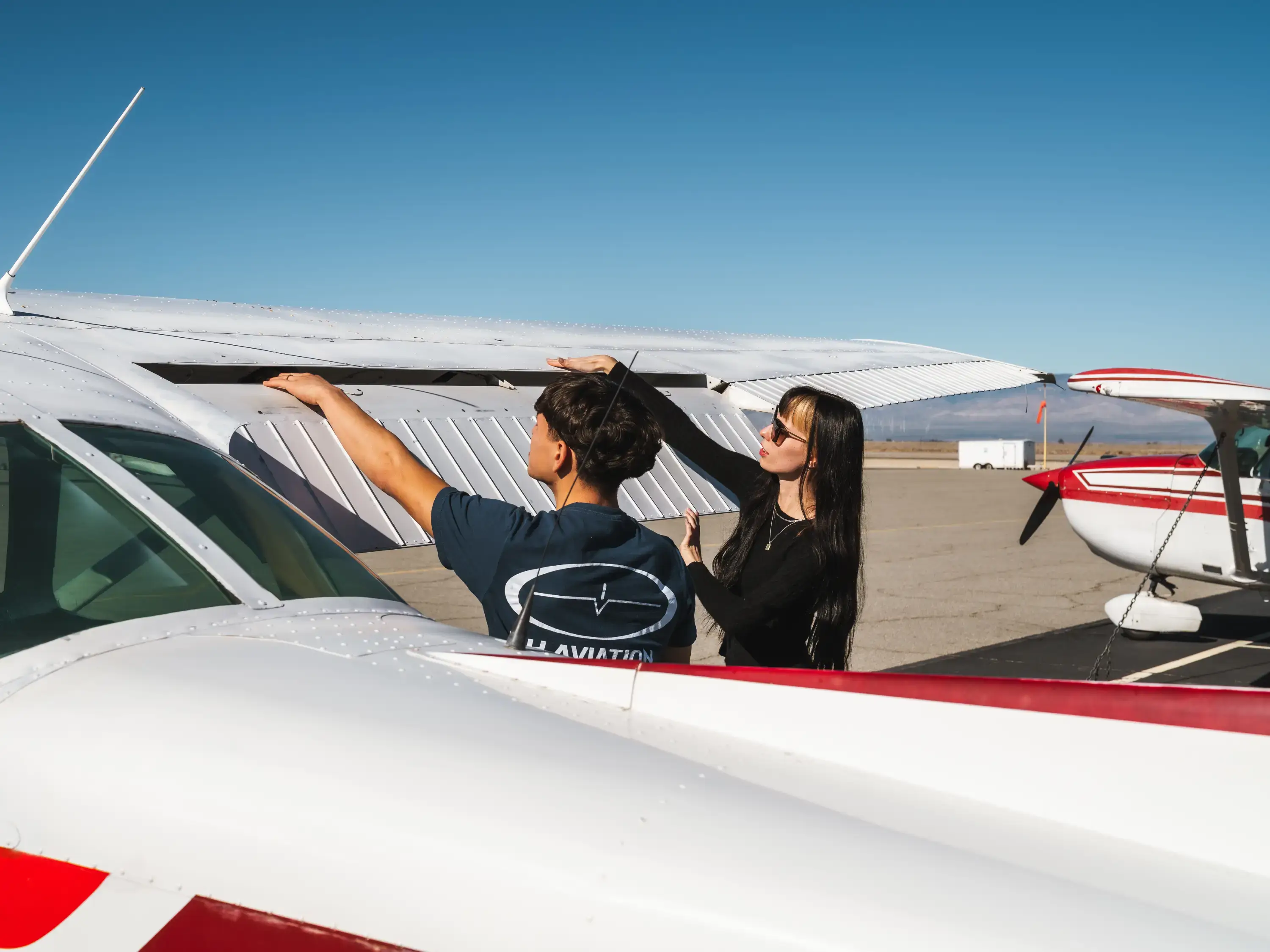
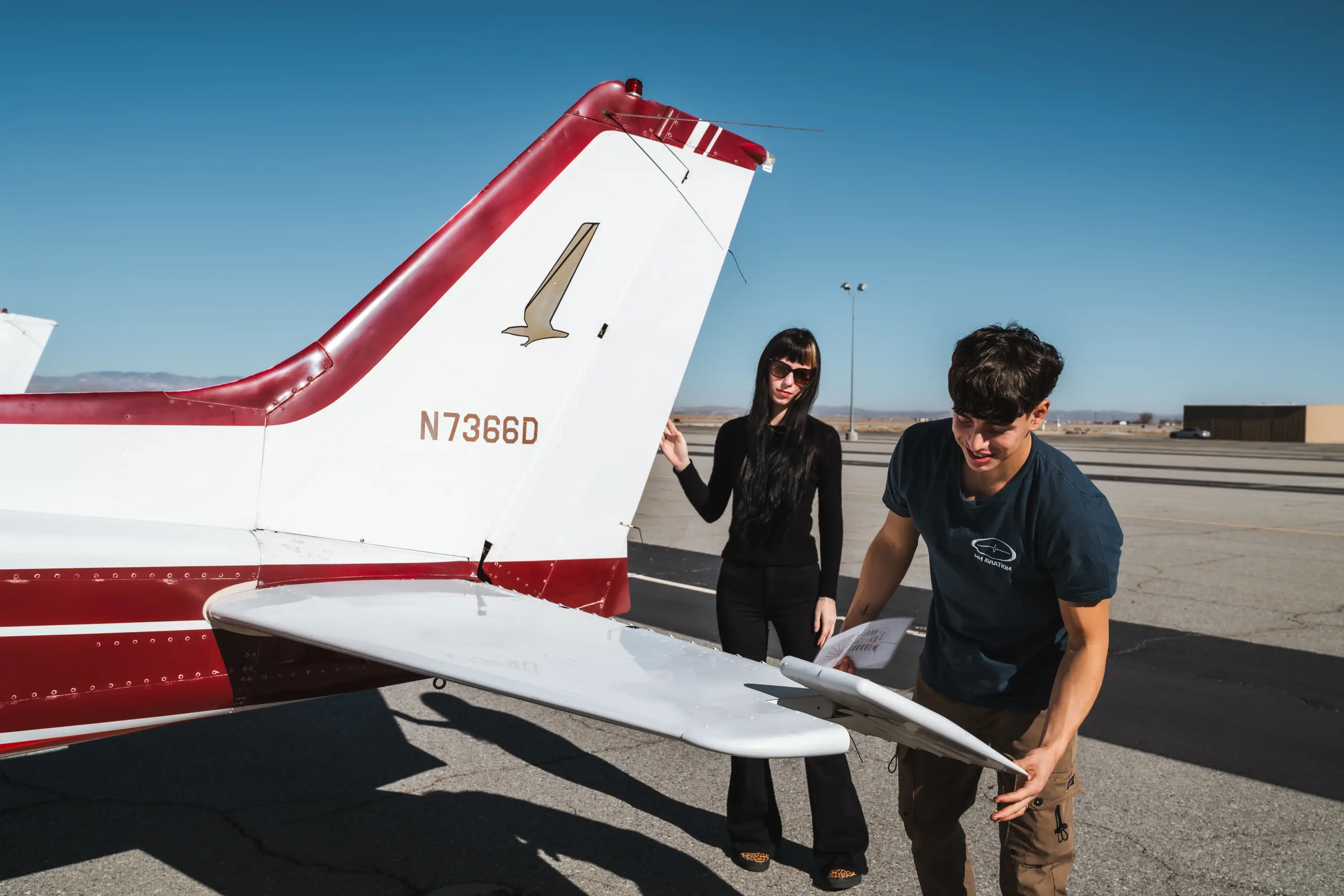
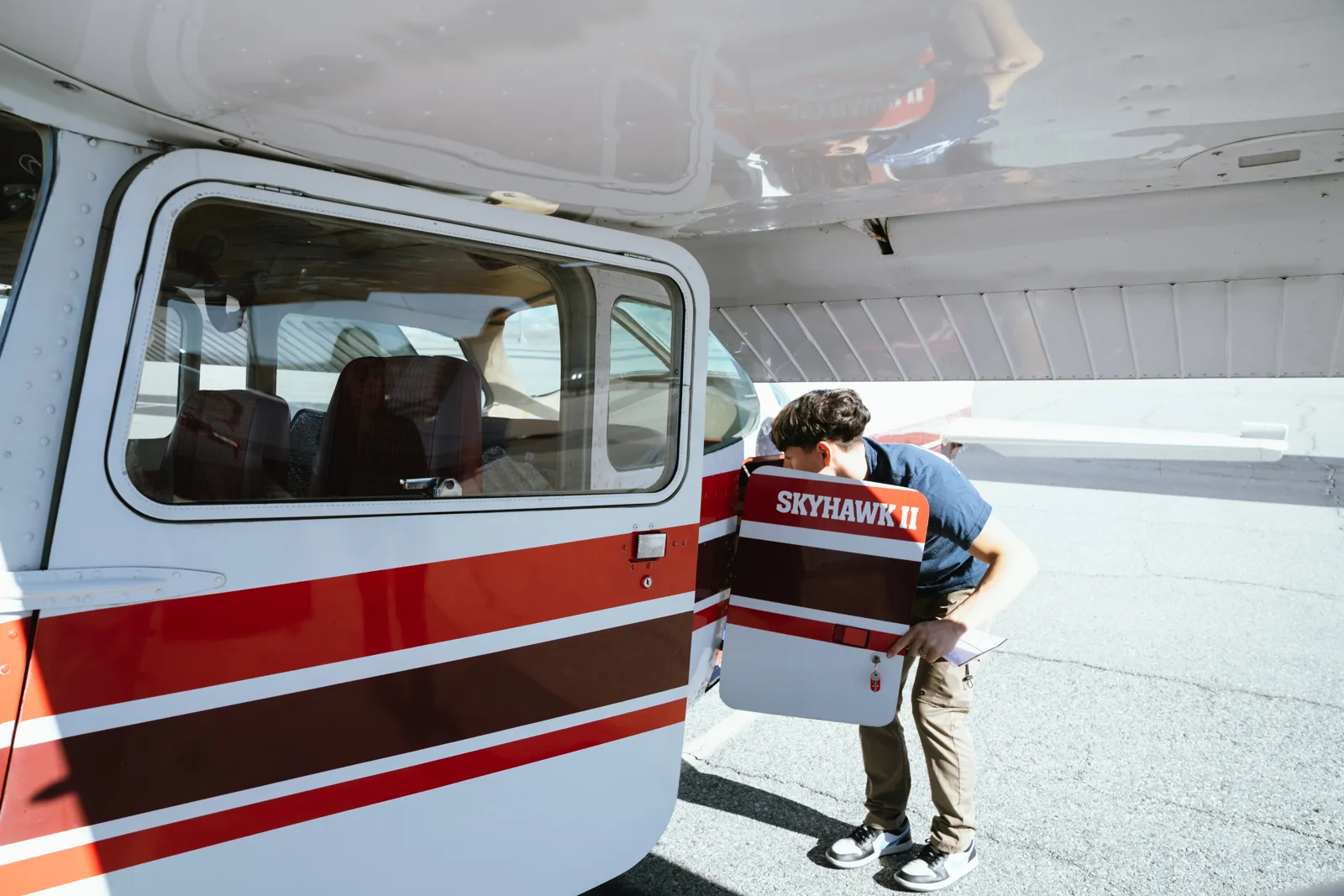
A little preparation helps a first flight go smoothly, especially for a younger flyer. Talk through the day ahead of time so nothing comes as a surprise: the walk around the airplane, the headset, the noise of the engine at takeoff, and the moment the wheels leave the runway.
Make sure your teen eats a light meal an hour or two before and wears comfortable clothes, closed-toe shoes and sunglasses. Encourage them to write down a few questions. Young flyers often feel shy in front of an instructor, and a short list makes it easier to speak up.
Above all, let them set the pace. Some teens want to take the controls right away. Others prefer to watch for the first half of the flight and try a gentle turn later. Both are fine, and our instructors adjust to the flyer in the seat. The goal of the day is a clear answer to one question: do they want to keep flying?
What parents usually want to know
Who flies the airplane? A certified flight instructor, who is the pilot in command for the whole flight. Your teen may take the controls with the instructor beside them, and the instructor can take over at any moment.
What do I sign? Before the flight we send an Introductory Flight Hold Harmless & Liability Form that covers risk, safety, payment and scheduling terms. Read it together with your teen before the day.
Can I come along? Many parents come to Fox Field to see the takeoff. Tell us when you book so we can plan the visit, and see our discovery flight FAQ for more.
What does it cost? The Intro Flight is $199: $149 for the aircraft when you schedule and $50 for the instructor after the flight. If your teen goes on to train, we use a pay-as-you-go model instead of direct financing, so you pay lesson by lesson. Our rates page has current hourly prices.
Frequently Asked Questions
Is there a minimum age for a discovery flight?
The FAA sets no minimum age to fly with a certified instructor. Schools set their own policies, so contact us before booking for a child or a younger teen.
How old do you have to be to fly solo?
You need a student pilot certificate to fly solo, and the FAA minimum age for an airplane student pilot certificate is 16.
How old do you have to be to get a pilot license?
The FAA minimum age for a private pilot certificate in an airplane is 17.
Am I too old to take a discovery flight?
No. The FAA sets no upper age limit for learning to fly. Medical eligibility matters once you train toward solo, not for a discovery flight.
Does a teenager need a medical certificate for a discovery flight?
No. A medical certificate is needed before flying solo, not for a flight with an instructor.
Can flight time before age 16 count toward a license?
Time logged with a certified instructor can count toward the hours a private pilot needs, whatever the student’s age when they flew it.
Start at any age with an Intro Flight
Whether your teenager is counting down to 16 or you have waited decades to try, the first step is the same: one flight at Fox Field with a certified instructor, about 45 minutes in the air over the Antelope Valley.