 MH Aviation
 How Long Does It Usually Take to Get a Multi-Engine Checkride Scheduled?
You can finish all your multi-engine training, be fully ready for the checkride, and still end up waiting weeks or even months.
At many flight schools, that delay is considered normal.
Why Checkride Delays Are So Common
In most parts of the country, there are:
- Very few Designated Pilot Examiners (DPEs)
- A limited number of multi-engine aircraft (that actually work)
- A backlog that rarely disappears
So what usually happens?
You finish training. Your instructor signs you off. And then you wait. Or worse, you get a date, and the airplane breaks the day before.
Two weeks turns into four. Four turns into eight.
While you are waiting:
- Skills start to get rusty
- Refresher flights become necessary
- Costs go up
What “Normal” Looks Like at Most Schools
At many flight schools, a 3 to 8 week wait for a multi-engine checkride is completely normal.
In high-demand areas, it can be even worse. Often, the delay isn’t just the examiner—it’s the airplane. Multi-engine aircraft like twins are complex and maintenance-heavy. Most schools rely on outside mechanics, meaning if a prop governor acts up, you are grounded for weeks.
How MH Aviation Is Different
This is one of the major structural advantages of training at MH Aviation in Lancaster.
We are not just a flight school; we are a Full Service Repair and Maintenance Center.
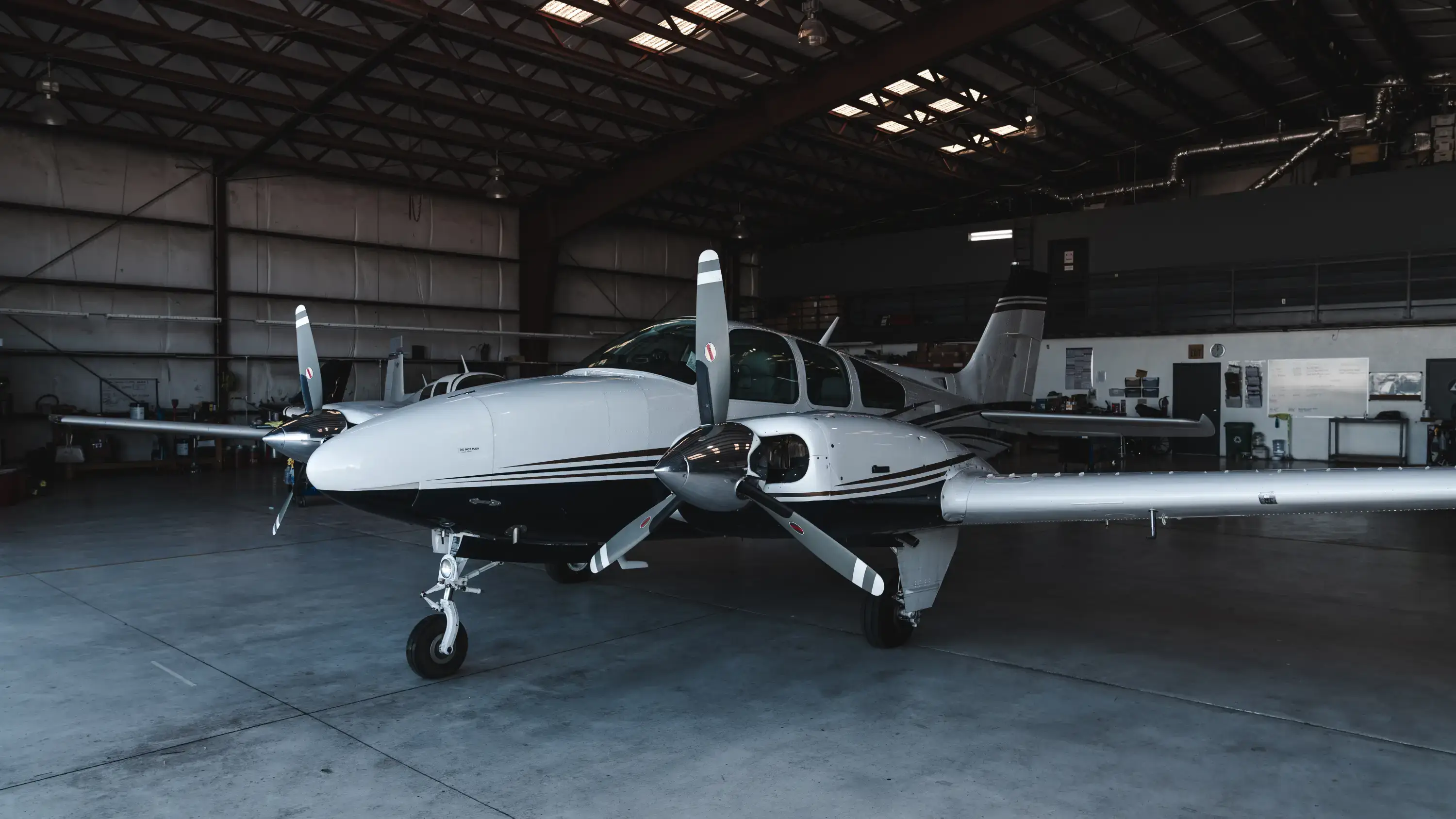
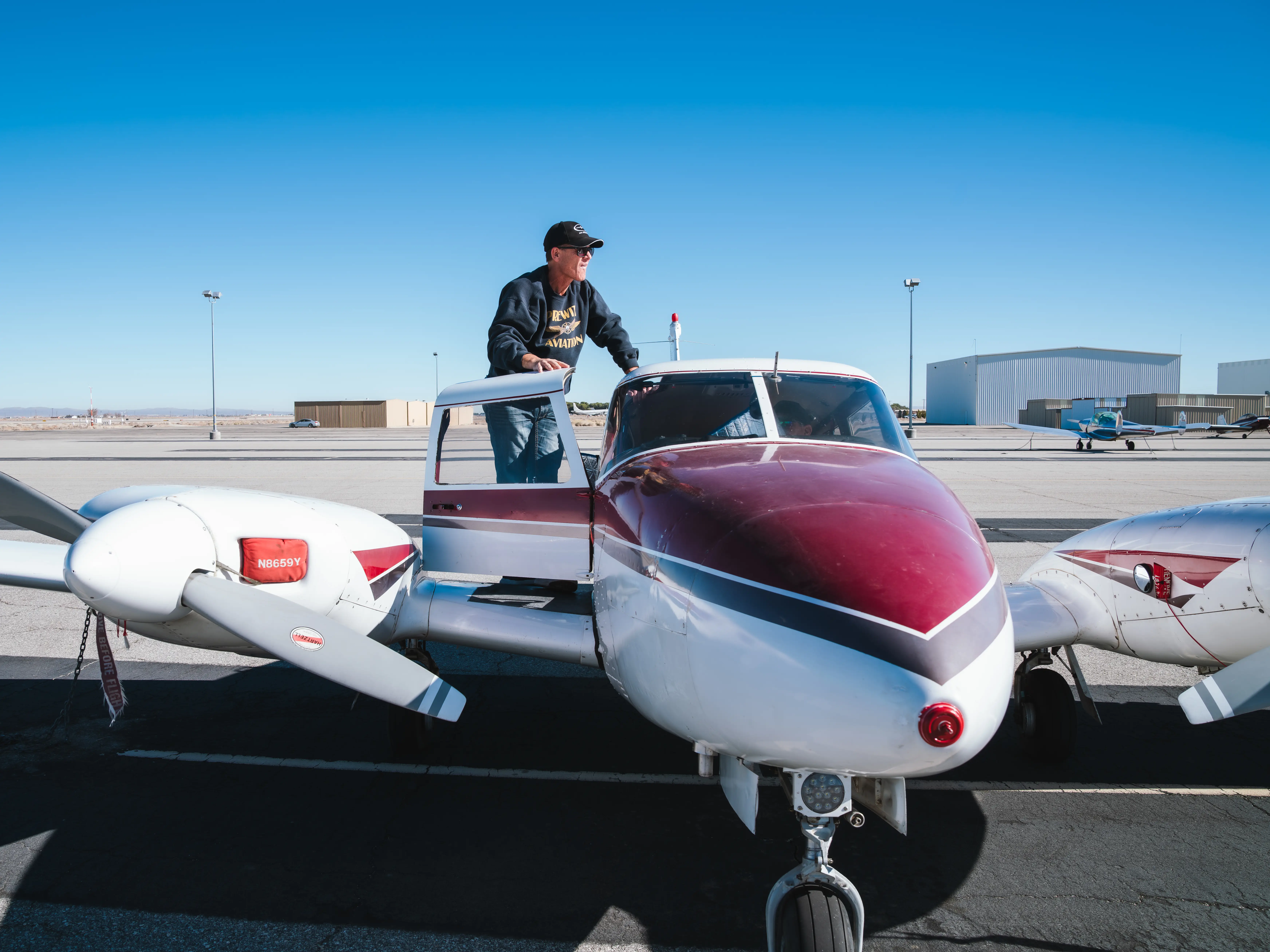
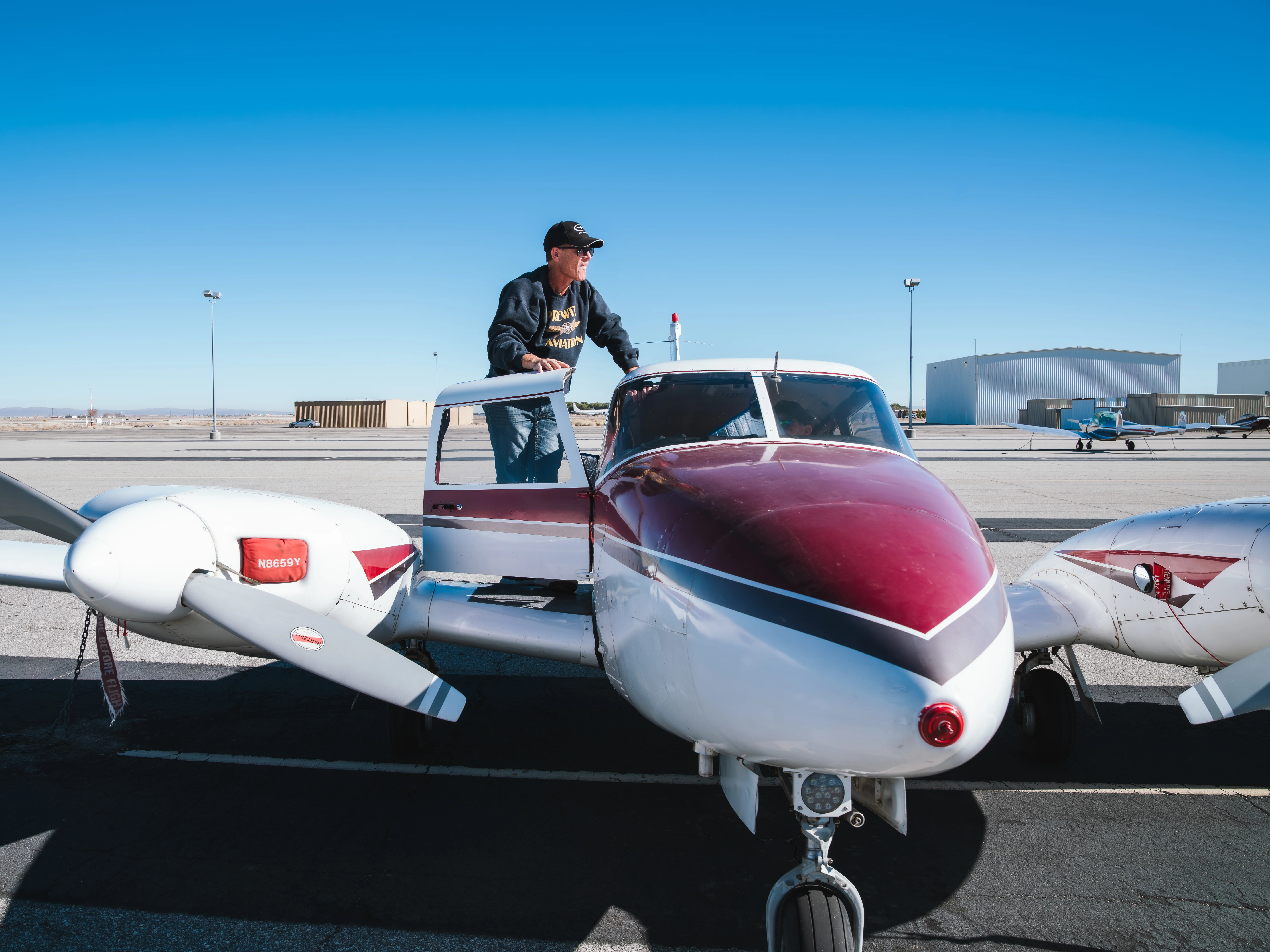
Our multi-engine trainer, the Piper PA-30 Twin Comanche (N8267Y), is maintained by our own family-run shop.
That changes the entire process.
- Mechanical Readiness: If a squawk comes up before your checkride, our team (led by Michael Haney, Chief Inspector) is right there to address it.
- Scheduling: We use Flight Schedule Pro to ensure you and the aircraft are ready when the examiner is available.
In practical terms, this means we eliminate the “mechanical cancellation” loop that traps so many multi-engine students.
Why This Matters More Than People Think
Waiting for a checkride is not just frustrating. It is expensive.
Every additional week often means:
- Extra review flights in a twin engine (which is more expensive than a single)
- Additional instructor time
- More money spent
Mentally, it is also difficult to feel finished but not actually be finished.
The Real Answer
The honest comparison looks like this:
- At many schools: weeks of uncertainty due to maintenance and scheduling - At MH Aviation: Reliable aircraft and professional scheduling It is a small structural detail—owning the maintenance shop—that makes a major difference in how fast, smooth, and predictable your multi-engine training experience is.